Attrition
- Content Team
- April 1, 2024
Applicant Tracking, Recruitment Marketing, Sourcing and Talent CRM software are powerful alone, but unstoppable when used together!
Not sure what is attrition? Attrition is a term often used in human resources and talent management. The term is related to the process of downsizing the workforce of a company. Here is an exact definition of the term.

Definition: What is attrition?
➡️ Before we begin, check out our HR guide that can help you prevent attrition: Transform your Hiring Process from Reactive to Proactive.
Attrition is a gradual voluntary reduction of employees (through resignation and retirement) who are not then replaced. This means that attrition decreases the size of the workforce.
Don’t confuse the attrition definition with turnover definition!
The difference between employee turnover and attrition definition can be boiled down to the reasons why employees leave the company. Reasons why employees leave companies can be numerous, and it is employer’s job to investigate and understand the reasons.
Attrition statistics
Here are just a few reasons for attrition in HR:
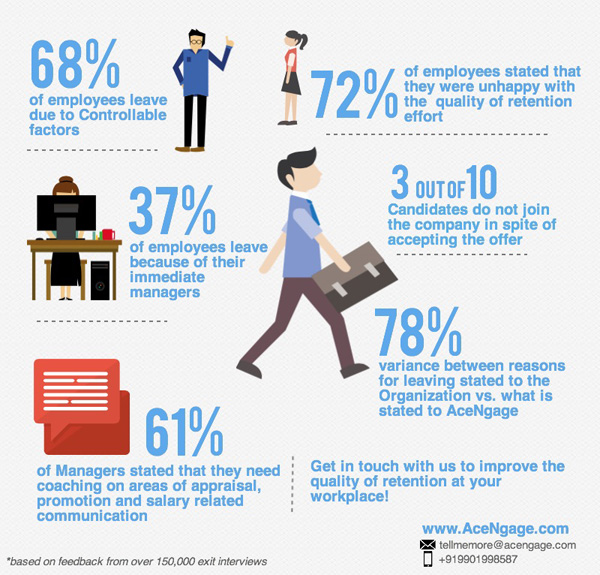
- 68% of employees leave due to Controllable factors
- 72% of employees claim they were unhappy with the quality of retention effort
- 37% of employees because of their immediate manager
- 3 out of 10 candidates do not join company in spite of accepting the offer
- 61% of managers stated they need coaching on areas of appraisal, promotion and salary related communication
Source: acengage.com
How to calculate the attrition rate?
Attrition rate shows the rate at which employeesare leaving a company.
Attrition can be calculated using this formula:
ATTRITION RATE (%)= (Number of leaves/number of employees)*100
Why is attrition important?
High attrition significantly increases costs to the company. When this is high, employers lose a lot of money invested into recruitment, selection, onboarding, employee training, etc.
In addition, there is alsoa cost associated with having positions opened resulting in lower productivity related to having your employees leave voluntarily.
Employee Attrition vs. Employee Turnover
Though the terms might seem similar, each of them gives different perspectives on the organization. Employee turnover applies to the cycle of hiring and firing that happens within an organization. A company is said to have high employee turnover rates when their employees routinely leave or are fired, resulting in the need to hire again.
On the other hand, attrition refers to when an employee voluntarily leaves and the company decides not to replace that employee with another one. Both terms refer to the health of an organization but provide information from different perspectives.
Causes for attrition
There are many causes of attrition, but here are a few most common examples of why it occurs:
- Unfair labor practice (ULP)
- Inability to grow and develop careers
- Lack of work-life balance
- Lack of employee recognition and awards
- Poor management
- Poor work conditions
- Lack of benefits
- Other reasons for attrition
How to prevent attrition?
There are many concrete strategies you can employ to prevent attrition.
To learn the best practices for preventing it, check out our guide: 9 Tips for Keeping Your Best Employees!
Applicant Tracking, Recruitment Marketing, Sourcing and Talent CRM software are powerful alone, but unstoppable when used together!