Job Requirements
- Content Team
- April 1, 2024
Job requirements definition
Identifying Essential Qualifications
Distinguishing Must-Have vs. Nice-to-Have
Educational Background and Skills
Industry-Specific Requirements
Technical Proficiencies and Certifications
Compliance with Legal and Ethical Standards
Experience and Background
Relevance of Previous Work Histories
Achieving Diversity in the Workplace through Varied Experiences
Soft Skills and Personality Traits
Communication and Teamwork
Adaptability and Problem-Solving
Physical and Location Requirements
Physical Abilities and Health Considerations
Cultural Fit and Company Values
Aligning Personal Values with Company Culture
Encouraging Inclusivity and Diversity
Updating and Evolving Requirements
Keeping Pace with Industry Changes
Incorporating Feedback and Continuous Improvement
Job Requirements in Job Descriptions
Crafting Effective Job Listings
Utilizing Job Requirements to Attract the Right Candidates
Importance of job requirements
For employers
For job seekers
How to write great job requirements?
Job requirement synonyms
Learn more
Applicant Tracking, Recruitment Marketing, Sourcing and Talent CRM software are powerful alone, but unstoppable when used together!
Job requirements are “must haves” that an employer is looking for in a candidate for a certain job position. Job requirements aren’t just a list of specific qualifications, education, knowledge and skills needed for a particular position. They are a great opportunity to showcase your Employer Brand and company culture and attract the best candidates!
In today’s dynamic job market, understanding job requirements is more crucial than ever. Whether you’re a job seeker aiming to tailor your application to stand out or an employer seeking to attract the best candidates, clarity in job requirements plays a pivotal role. This article delves into the essence of job requirements, offering insights into how they shape the hiring landscape and influence career trajectories. Through exploring various dimensions, from essential qualifications to industry-specific needs and soft skills, we aim to provide a thorough understanding that benefits both employers and applicants alike.

Job requirements definition
Job requirements are qualifications and skills necessary for a certain position. Job requirementsare usually written in form of a list that contains the most important qualifications that a candidate must possess in order to be able to perform certain job duties.
Identifying Essential Qualifications
Distinguishing Must-Have vs. Nice-to-Have
It’s vital to differentiate between essential qualifications and desirable traits. Essential qualifications are non-negotiables, the backbone of job performance. On the other hand, nice-to-haves enhance a candidate’s profile but aren’t deal-breakers. This distinction helps applicants focus their efforts and enables employers to set realistic expectations.
Educational Background and Skills
Education and skill sets form the cornerstone of job requirements. Specific roles demand certain educational achievements or specialized skills. Understanding these prerequisites allows candidates to better position themselves in the job market, while employers can more accurately match talent to their needs.
Industry-Specific Requirements
Technical Proficiencies and Certifications
Certain sectors require unique technical skills or certifications. From IT to healthcare, staying abreast of these requirements is crucial for both hiring parties and job seekers. They ensure that the workforce is competent and capable of meeting industry standards.
Compliance with Legal and Ethical Standards
Many industries are regulated by legal and ethical standards. Awareness and compliance are non-negotiable, safeguarding the company and its employees. This segment explores the importance of aligning job requirements with these standards to maintain integrity and trust in the professional setting.
Experience and Background
Relevance of Previous Work Histories
Experience can often be a critical deciding factor in the hiring process. This section discusses how relevant work history not only demonstrates a candidate’s capability but also provides insights into their potential for growth and adaptation in new roles.
Achieving Diversity in the Workplace through Varied Experiences
Diverse experiences bring innovative perspectives to the workplace. Here, we explore how varied backgrounds contribute to a rich, inclusive environment that fosters creativity and problem-solving.
Soft Skills and Personality Traits
Communication and Teamwork
In almost every industry, effective communication and teamwork are indispensable. This part of the article highlights the value of these soft skills and how they contribute to a harmonious and productive work environment.
Adaptability and Problem-Solving
The ability to adapt and tackle challenges head-on is highly prized in today’s fast-paced world. We delve into why these traits are essential and how they can be nurtured for professional development.
Physical and Location Requirements
Workplace Accessibility and Remote Work Opportunities
The evolving nature of workspaces, including the rise of remote work, has altered physical and location requirements. This section examines these changes and their implications for job seekers and employers.
Physical Abilities and Health Considerations
For certain roles, physical abilities may be a requirement. This part discusses the importance of transparency and accommodation in these instances, ensuring a suitable match between job demands and applicant capabilities.
Cultural Fit and Company Values
Aligning Personal Values with Company Culture
A harmonious match between an individual’s values and the company culture enhances job satisfaction and productivity. This segment offers insights into how both parties can assess this alignment during the hiring process.
Encouraging Inclusivity and Diversity
Promoting an inclusive and diverse workplace is not just a moral imperative but also a competitive advantage. Here, we discuss strategies for embedding these principles into job requirements and organizational culture.
Updating and Evolving Requirements
Keeping Pace with Industry Changes
As industries evolve, so do the requirements for working within them. This section emphasizes the importance of continuous learning and adaptability in maintaining relevance in one’s career.
Incorporating Feedback and Continuous Improvement
Feedback is a valuable tool for growth. This part explores how both employers and employees can use feedback to refine job requirements and personal qualifications over time.
Job Requirements in Job Descriptions
Crafting Effective Job Listings
Creating clear and comprehensive job listings is an art. This segment provides tips for employers on how to articulate job requirements effectively, attracting the right candidates.
Utilizing Job Requirements to Attract the Right Candidates
By accurately presenting job requirements, companies can streamline the recruitment process. This section offers strategies for using job requirements as a filter to ensure a good fit between job seekers and the organization.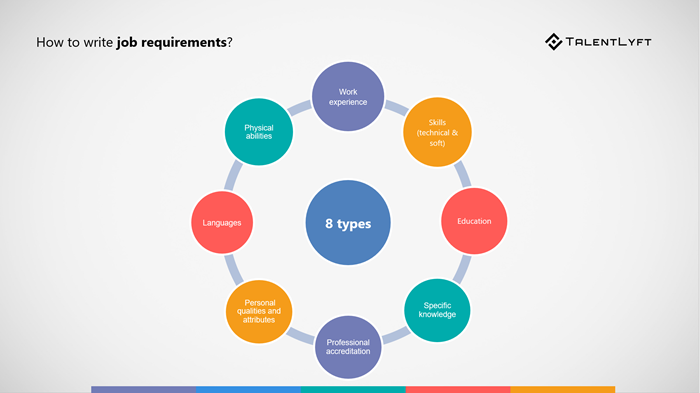
In short… Job requirements are “must haves” that an employer is looking for in a candidate for a certain job position.
Importance of job requirements
Job requirements are a crucial part of both job descriptions and job postings (job ads). They are equally important for both employers and job seekers.
For employers, clearly defined job requirements are crucial in attracting the right candidates. They help in:
- Streamlining the recruitment process by filtering candidates.
- Setting clear expectations for the role.
- Identifying the best fit for the company culture and job responsibilities.
For job seekers, understanding these requirements is key to tailoring their applications, highlighting relevant experience, and preparing for interviews.
For employers
Employer use job requirements as a way of preselecting potential candidates.
Job requirements are used to communicate employer’s expectations from job seekers.
By laying out clearly defined job requirements, employers can attract the right typeof candidates. Over or under qualified candidates will be turned away from applying, thus saving employers a lot of time and money in the long run.
For job seekers
For job seekers, job requirements are the crucial part of job postings (job ads).
Job requirements section of the job ads clearly states what an employer is looking for. That way, potential candidates can know what is required of them before applying.
If they match all the job requirements criteria, it means they are a good fit for a job.
How to write great job requirements?
Check out our guide for writing job requirements. It contains everything you need to know about job requirements plus a selection of the best and worst examples!
Job requirement synonyms
Job requirements are also known as:
- Selection criteria
- Prerequisites
- Qualifications
Learn more
Applicant Tracking, Recruitment Marketing, Sourcing and Talent CRM software are powerful alone, but unstoppable when used together!