HR Glossary

Diversity

Table of contents

Diversity definition

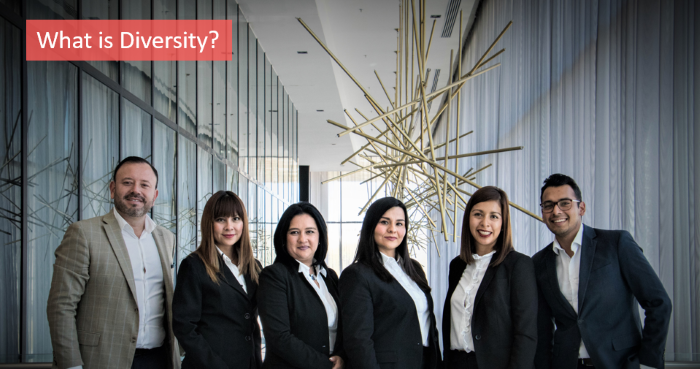
Diversity refers to the collective mixture of similarities and differences among company’s employees such as: age, individual and organizational characteristics, values, beliefs, experiences, cultural background, religion, race, gender, physical abilities and disabilities and sexual orientation.
what-is-diversity

Diversity definition

Diversity refers to the collective mixture of similarities and differences among company’s employees such as: age, individual and organizational characteristics, values, beliefs, experiences, cultural background, religion, race, gender, physical abilities and disabilities and sexual orientation.

For more about diversity read our article on Dimensions of diversity.

See TalentLyft in action

Applicant Tracking, Recruitment Marketing, Sourcing and Talent CRM software are powerful alone, but unstoppable when used together!


Related content

  • Ban the box is the name of an international movement initiated by civil rights group who require employers to remove questions related to the applicant's criminal...

  • Business continuity planning is the management process of creating systems of prevention and recovery.Business continuity planning definitionBusiness continuity planning (BCP) is a strategic process undertaken by...

  • Carve out is a term which refers to the elimination of coverage of a specific category of benefit services, most commonly medical services which are not...

  • Distance learning is a formalized teaching and learning educational program where an individual uses instructions via video, audio tapes or computers instead of attending a class...

Explore more topics

  • Mastering the Interview

    Conducting an effective interview means getting the best and most out of a candidate in a limited time frame. To do that you need to ask the right questions. From general questions to more strategic ones, here you'll find all the questions you need to get what you need to help you choose the best candidate.

  • Candidate Relationship Management

    Improve your hiring process with effective Candidate Relationship Management (CRM). Build and nurture strong relationships with candidates by leveraging CRM tools to engage, communicate, and maintain long-term connections. Enhance candidate experience, increase retention, and create a robust talent pipeline for future hiring needs.

  • Recruitment Marketing Strategy

    Develop an impactful recruitment marketing strategy to attract top talent. Learn how to create targeted campaigns, build a strong employer brand, and use digital channels to reach and engage potential candidates. Optimize your recruitment efforts with strategies that showcase your company culture and position you as an employer of choice.

  • Successful Recruiter

    Discover the key traits, strategies, and tools that make a recruiter successful. Learn how to build strong relationships, source top talent, and navigate the hiring process efficiently. Equip yourself with the skills and techniques to consistently find and secure the best candidates for your organization.

  • HR Tech Trends

    HR Tech Trends – Stay ahead of the curve with the latest HR technology trends. Discover how innovations like AI, automation, and data analytics are transforming talent acquisition, employee management, and workplace productivity. Embrace these cutting-edge tools to optimize your HR processes and drive organizational success.

  • Conducting Interviews

    Interviews are the make-or-break phase of the recruitment process as this is where you truly get to know the candidates and try to get the best out of them. Effective interviews require preparation and use of the right methods and strategies to get the most from a limited time frame. In this blog section, we dive into the art of conducting interviews, exploring the best tactics, the most efficient methods, and useful strategies to make you a better interviewer.

Simple and affordable recruitment software