Recruitment Funnel
- Content Team
- April 1, 2024
See TalentLyft in action
Applicant Tracking, Recruitment Marketing, Sourcing and Talent CRM software are powerful alone, but unstoppable when used together!
A recruitment funnel, also known as a talent acquisition funnel or hiring funnel, is a visual representation of the various stages and steps involved in the recruitment process. It resembles a traditional sales funnel, where a large number of potential candidates enter the top of the funnel, and only a few are ultimately hired at the bottom.
 Image by Freepik
Recruitment Funnel Definition
In the context of human resources and talent acquisition, a recruitment funnel, also known as a hiring or applicant funnel, is a visual representation of the entire process that a company follows to attract, engage, and ultimately hire qualified candidates for a specific job or role. The recruitment funnel typically consists of several stages that candidates progress through as they move closer to being hired.
Stages of a Recruitment Funnel
The stages of a recruitment funnel represent the step-by-step process that organizations use to attract, assess, and hire candidates for specific job positions. These stages help streamline the recruitment process and guide candidates through the various steps before a final hiring decision is made.
Most of the stages in the recruitment funnel mirror the stages of a marketing or sales funnel. These stages are typically focused on the candidate’s journey and their interactions with the company during the recruitment process. The typical stages of a recruitment funnel include the 6 stages shown below.
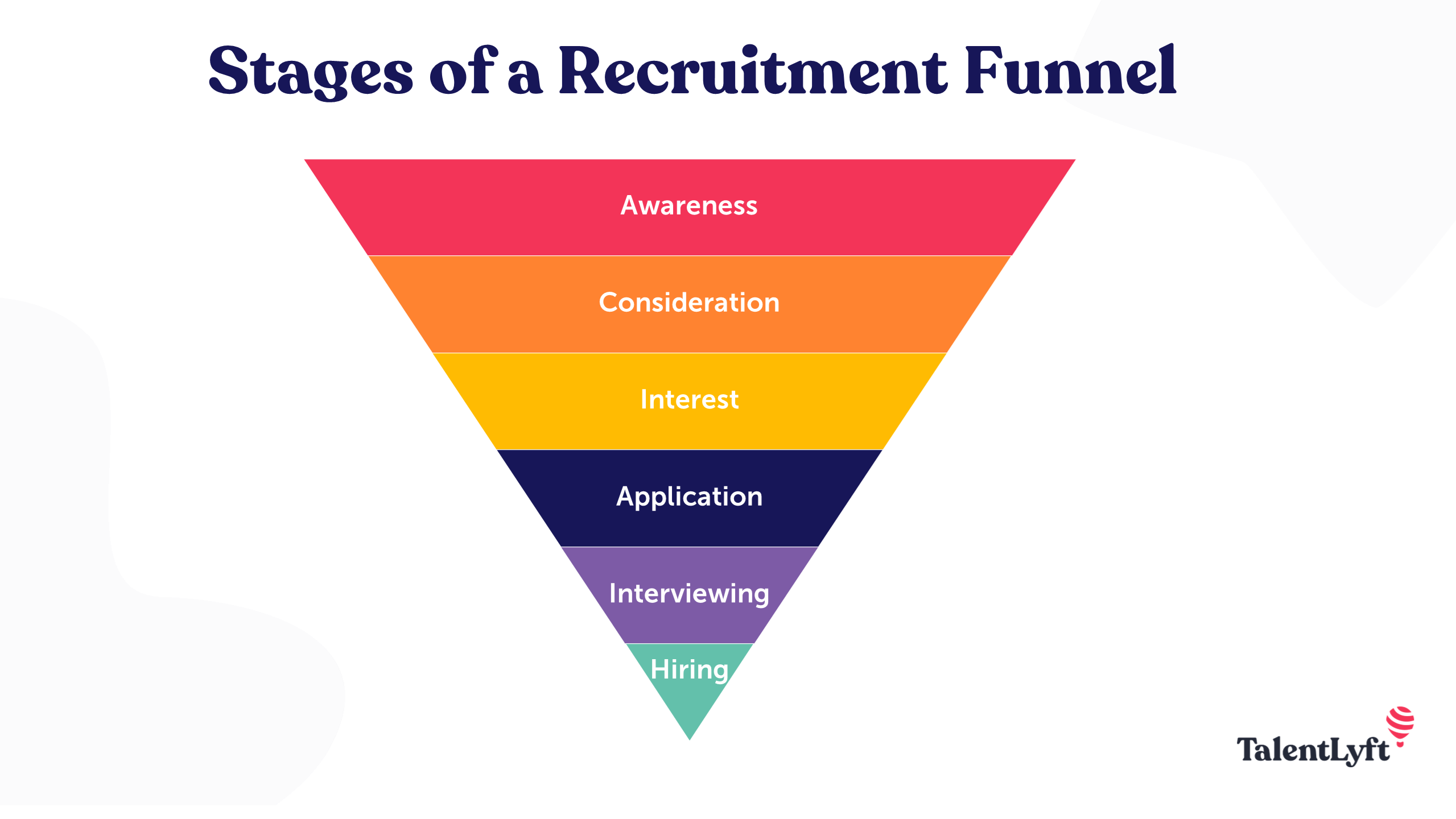
Awareness
At the top of the recruitment funnel, the “Awareness” stage focuses on creating awareness and attracting potential candidates to the company and its job openings. This is achieved through recruitment marketing efforts, employer branding, and establishing a strong online presence to reach a broad audience. Potential candidates become aware of your company’s existence and possible employment opportunities.
Consideration
In the consideration stage, potential candidates who have become aware of the company and its job opportunities start to explore the available positions more seriously. They might visit the company’s career website, engage with its social media content, and research its culture and values. This stage focuses on providing relevant and compelling information to nurture candidates’ interest.
Interest/Engagement
In this stage, a candidate has expressed interest in a specific position and is potentially getting ready to take the next step.This stage involves actively engaging with potential candidates who have shown interest in specific job openings. Recruiters may conduct pre-screening calls or informational interviews to assess the candidates’ fit for the roles and answer any questions they may have.
Application
This is the stage where interested candidates formally apply for the positions they have considered. This step involves submitting their resumes, cover letters, and other required documents through the company’s applicant tracking system or designated platforms.
Interviewing
Candidates who pass the initial application review are invited for interviews. This stage may include multiple rounds of interviews to assess a candidate’s qualifications, skills, and cultural fit within the organization. Additional assessments or tests may be conducted to further evaluate a candidate’s suitability for the role and potential for success.
Get the best out of your candidates: 30 Strategic Interview Questions to Ask Candidates
Hiring
After conducting interviews, assessments, and evaluations, the hiring team makes a final decision on the most suitable candidate for the position and extends a job offer. Once the candidate accepts the offer and completes the necessary formalities, they become an official employee of the company.
Ready to start hiring the best talent? Download our FREE E-book and learn the Most Productive Recruitment Marketing Strategies that you can use to optimize your recruitment funnel and attract the best talent!
See TalentLyft in action
Applicant Tracking, Recruitment Marketing, Sourcing and Talent CRM software are powerful alone, but unstoppable when used together!