Candidate-centric recruiting
- Content Team
- April 1, 2024
What is candidate-centric recruiting?
Difference between employer-centric and candidate-centric recruiting
The shift from employer-centric to candidate-centric recruitment
The importance of candidate-centric recruiting
Top companies lead in candidate-centric recruiting
Candidate-centric recruiting strategies
Applicant Tracking, Recruitment Marketing, Sourcing and Talent CRM software are powerful alone, but unstoppable when used together!
Candidate centric-recruiting is the recruiting approach in which candidates are put in the centre. The goal of candidate-centric recruiting is building long-term relationships with candidates, not only hiring the best candidates for your currently open job positions.

What is candidate-centric recruiting?
Candidate-centric recruiting is the recruiting approach in which candidates are put in the center.
In candidate-centric recruiting, employers and recruiters focus on candidates and their needs and experience.
The goal of candidate-centric recruiting is building long-term relationships with candidates, not only hiring the best candidates for your currently open job positions.
Difference between employer-centric and candidate-centric recruiting
The focus in candidate-centric recruiting is on candidates, while the focus in employer-centric recruiting is on employers.
In employer-centric recruiting, employers and their needs are put first.
In candidate-centric recruiting, candidates and their needs are put first.
Basically, the main difference between employer-centric and candidate-centric recruiting is this one:
Employer centric recruiting focuses on filling open positions, while candidate-centric recruiting focuses on building relationships with candidates.
The shift from employer-centric to candidate-centric recruitment
Candidate-centric recruiting is a relatively new trend in recruiting. A traditional recruiting approach was employer-centric. However, times have changed. The employer-centric era is long gone.
What has happened?
The main cause of this change is the job market state. The current unemployment rate is record low – which means that candidates are now in demand. According to research, 90% of recruiters agree that the current job market is candidate-driven. This means that candidates now pick companies they want to work for – not the other way around.
As a result, the way we recruit has changed from an employer-centric to a candidate-centric approach.
The importance of candidate-centric recruiting
Consider these statistics:
- 63% of job seekers will likely reject a job offer because of a bad candidate experience (Source: Software Advice)
- 72% of job seekers that had a bad experience told others about it, either online or in-person (Source: CareerArc)
- 64% of job seekers say that a poor candidate experience would make them less likely to purchase goods and services from that employer (Source: CareerArc)
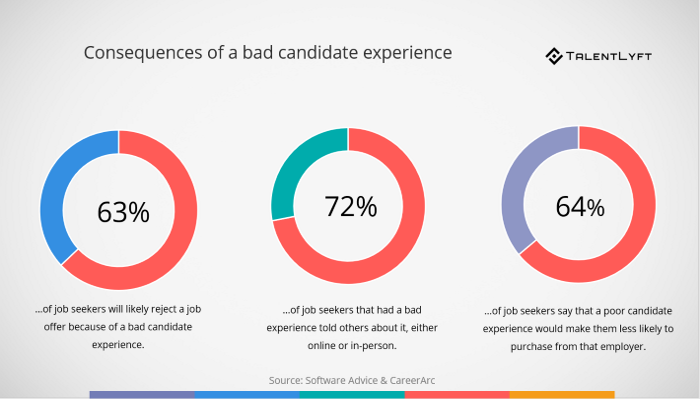
These statistics clearly show that the way you treat candidates matters, whether you hire them or not. Candidates with a bad candidate experience won’t accept your job offer, they will share their negative experience with your company on social media and they will stop buying your products.
If you want your company to be successful at attracting, hiring, and retaining top talent, you need to focus on improving how job candidates feel about your hiring process. Candidate-centric recruiting will help you improve the quality, time, and cost of hire!
Top companies lead in candidate-centric recruiting
Top world companies such as Google, Microsoft, Airbnb and Virgin Media were among first to accept and promote a candidate-centric recruiting approach.
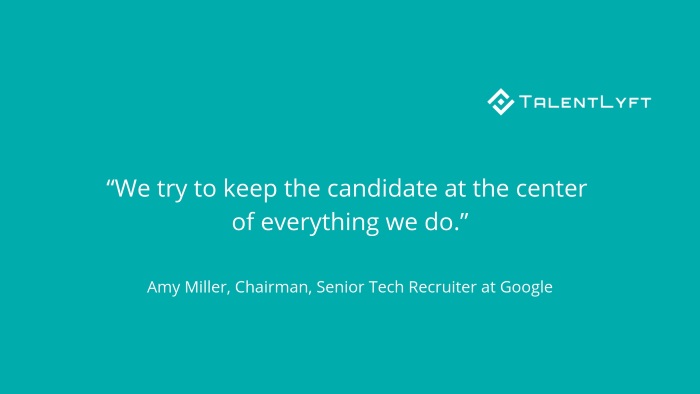
“We try to keep the candidate at the center of everything we do,”
says Amy Miller, a 12-year recruiting veteran who spent years recruiting data scientists and machine learning engineers for Microsoft. In the last few months, she does the same for Google, as their Senior Tech Recruiter.
These leading companies realized early on that if they wanted to attract and hire top talent, especially in-demand top talent such as tech talent, they needed to completely change their recruiting paradigm and process.
Candidate-centric recruiting strategies
Here are the top 10 candidate-centric recruiting strategies:
- Creating candidate personas
- Creating an attractive employee value proposition
- Writing great job advertisements
- Improving candidate experience
- Mapping candidate journey
- Creating recruiting content for every step of the candidate journey
- Building and maintaining talent pools
- Candidate relationship management
- Promoting your employer brand on social media
- Conducting candidate experience surveys
Applicant Tracking, Recruitment Marketing, Sourcing and Talent CRM software are powerful alone, but unstoppable when used together!