How Employee Referral Programs Can Improve Time, Cost and Quality of Hire?
- Kristina Martic
- October 27, 2017
What exactly are Employee Referral Programs?
How can companies benefit from having Employee Referral Programs?
How can Employee Referrals improve quality of hire?
How can Employee Referrals reduce turnover rates and improve employee retention?
How can Employee Referrals reduce time and cost to hire?
How can Employee Referrals strengthen Employer Brand?
Steps for creating a successful Employee Referral Program
Step 1. Understand your own goals
Step 2. Write a clear job description
Step 3. Make the process organized and streamlined
Step 4: Make sure to have a well-organized Employee Referral Bonus program
Step 5: Give feedback and communicate with referees
Step 6: Measure your program
Applicant Tracking, Recruitment Marketing, Sourcing and Talent CRM software are powerful alone, but unstoppable when used together!
EmployeeReferral Programs areyour best bet for improving the most important hiring metrics such as time to hire, cost per hire, employee retention and turnover rate and quality of hire. Common statement that referred candidates turn into best employees is not an opinion, it is a fact based on data. Do you have a structured employee referral program?
What exactly are Employee Referral Programs?
Research has proved many times that referrals make the best employees in many ways: they take shortest to hire, they are the least expensive to hire and they stay longer with companies compared to candidates that come from other sources such as job boards and career sites.
Employee referrals are structured programs that companies and organisations use to find talented people by asking their existing employees to recommend candidates from their existing networks.
Unlike sourcing, employee referral programs are internal methods used for finding and hiring high-quality job applicants.
How can companies benefit from having Employee Referral Programs?
Many of you already know that finding talent is one the biggest, if not the biggest, recruiting challenges. Trying to solve that problem, many modern recruiters have started involving their existing employees in the process of recruiting and hiring.
Using referral program best practices is one of the easiest and most productive ways for finding and hiring best talent out there.
Trends of data-driven recruiting have resulted in the need for optimizing the most important hiring metrics. Since employee referral programs are known to reduce time and cost to hire and improve retention and quality of hire, many recruiters have turned to referrals looking to improve their hiring productivity.
How can Employee Referrals improve quality of hire?
As mentioned before, employee referral programs are an internal method for finding job candidates. In these programs, existing employees are involved in recruiting by suggesting candidates from their networks for your firm’s open positions. Because your existing employees know best who your ideal candidate, also known as candidate persona, is, they are the ones that recommend candidates who make the best cultural fit for your company.
How can Employee Referrals reduce turnover rates and improve employee retention?
Employee retention is highly related to the quality of hire. The better the quality of hire, the better employee retention. This makes sense because if the candidate makes a good match from the beginning, it is very likely that they will stay longer with your company. If you hire someone who is not a good fit, they will leave sooner. Candidates that come from other sources such as job boards, don’t know about you as an employee as much as candidates who talk to your current employees.
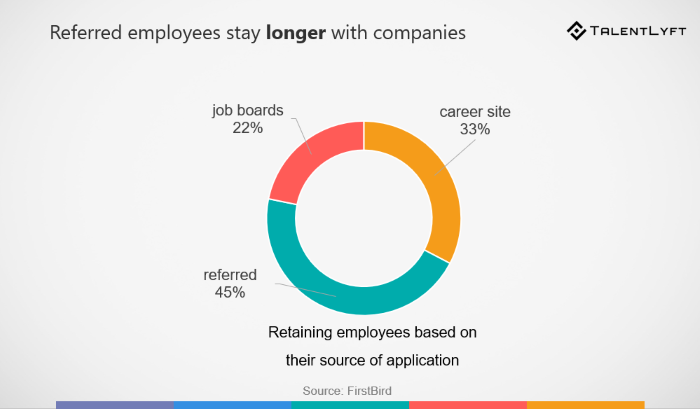
In addition, there is a lot of interesting research that proves that employees who have successfully referred a candidate for an open position, stay longer with the company than employees that haven’t. This is because employees who refer a candidate that gets hires have the sense of achievement and contribution to the company. They also tend to be much engaged and motivated compared to employees that don’t refer.
How can Employee Referrals reduce time and cost to hire?
When your employees talk to potential candidates from their personal networks, they probably talk about the whole hiring and onboarding process. This is what makes much easier for recruiters not only get their contact information but also go through the whole selection and onboarding process, making it much shorter.
Faster selection process also improves a new very important HR metric- Candidate Experience.
Shorter time to hire also reduces cost per hire. Labor expenses get lower and much less human hours are needed to fill a position. With less time spent on selection and onboarding, recruiters and HR managers can devote more time into building stronger relationships with candidates form their talent pools. Since time to hire is shorter, cost to hire also drops. You need less human hours to fill a position, and this automatically makes your hiring strategy more productive and efficient.
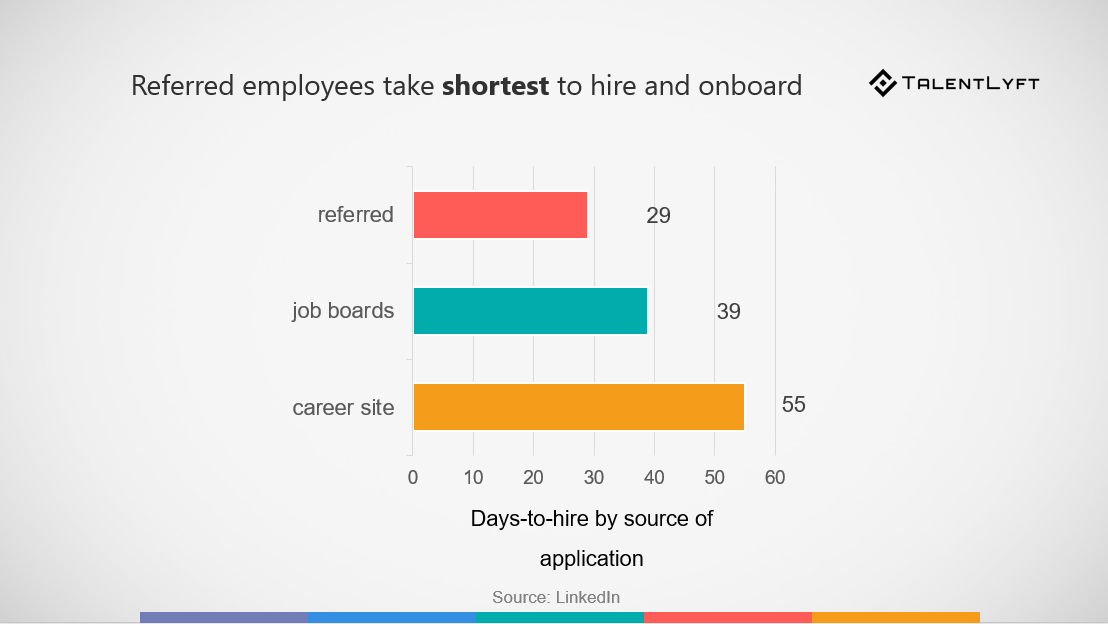
Also, after realizing that referrals are best hires, many companies eliminated expensive job boards and save thousands of dollars.
How can Employee Referrals strengthen Employer Brand?
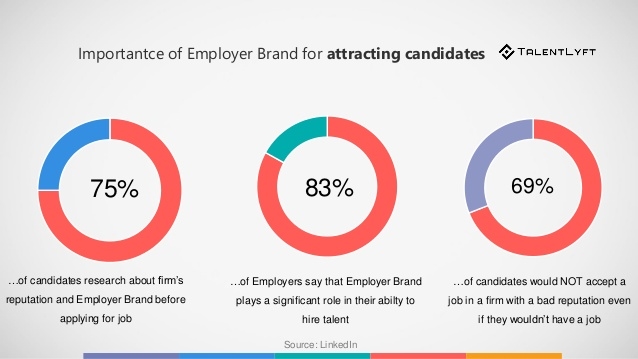
According to research done by LinkedIn more than 75% of candidates read about your company’s brand and reputation before they hit “apply”. When you employee wants to recommend someone for an open position, they talk to those candidates first. Trust me, these are mostly nice words about you as an employer and your Employee Value Proposition.
Since job seekers trust much more employees’ words than CEOs’ or words coming from corporate brands, this is a great way for building a stronger employer brand and attracting talent even for future job openings. Extending your talent pool with these people can’t hurt you, it can only make hiring and recruiting faster and more productive.
Steps for creating a successful Employee Referral Program
Step 1. Understand your own goals
Of course, your main goal is to find the best candidate ever. However, think about what referrals mean to your current and your future employees. Empowering your employees can be a very good way for engaging them and making them more motivated and productive.
Asking them for referrals can help you build stronger relationships with them and prevent them from leaving.
Most companies who use referrals use them because they have proven to be the best fit for their companies. If this is your main goal, makes sure to communicate the most important parts of your organizational culture to your existing employees. Make sure that they understand who exactly are you looking for.
Step 2. Write a clear job description
Even though your employees may know the requirements for the open position, it is important that you make sure that they do. Same as you write clear and precise job descriptions for job boards, you should also share them with your employees.The better they know the requirements, the better chances of finding the perfect fit.
Step 3. Make the process organized and streamlined
For companies who use recruiting tools such as Applicant Tracking System, employee referral programs are effortless and incredibly simple. This is important because the harder it is for an employee to refer someone, the lower response rate will be.
Tools like this can automatically send job openings to selected or all employees with the link to the job opening. When a candidate applies, he or she automatically gets imported as a referred candidate to your talent pool. You can also see who referred the candidates.
To save your time, you can use our HR resources page to get referral email templates such as:
- Referral request email to employees
- Thank you for referring email to employees
- Email to a referred candidate
- Email to referred candidates
- Employee referral reward email announcement
- Referral program announcement email to employees
Step 4: Make sure to have a well-organized Employee Referral Bonus program
When we talk to HR professionals about employee referral bonus programs, they often think of something very expensive. Yes, there are many employees that will only make an effort if you offer them a lot of extra money. However, there are many other ways, different than money, that you can incentivise good referrals with. Trips, gift cards, and sometimes even recognition can be enough.
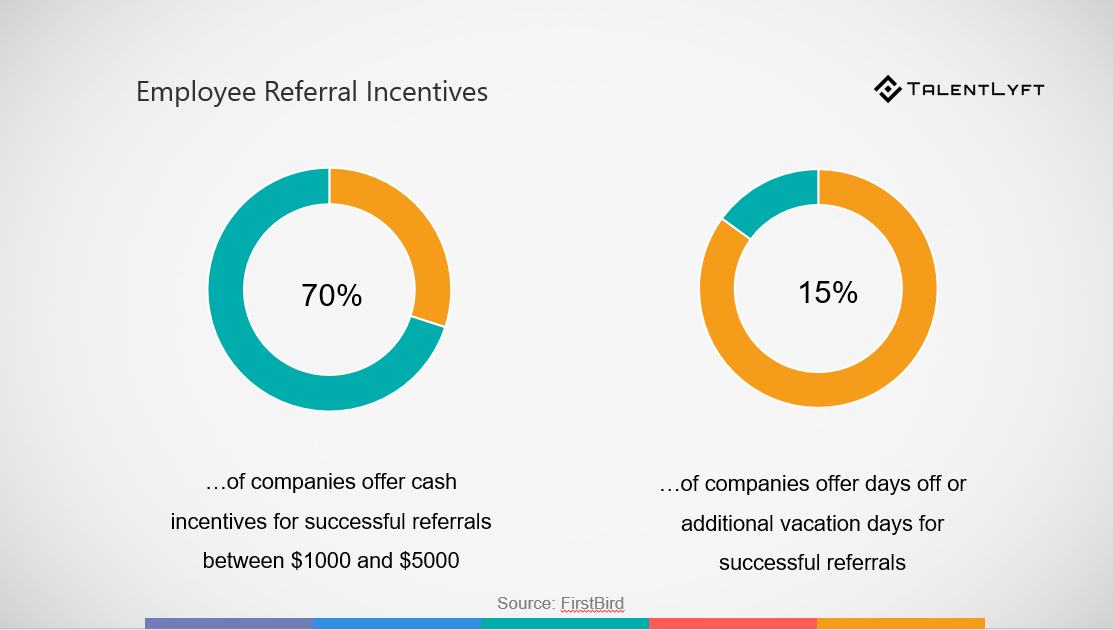
Also, it is important to understand that not every employee should get the same reward. A successful referral is the one that gets hired and stays with the company. Thus, rewards for a successful referral cannot be the same as for providing a contact to potential candidates.
You can do something like this:
- Give a $10 gift card for a name or contact.
- Give $200 when they start.
- Give $700 after they have been with a company for at least 3 months.
Here is the list of some most popular Employee Referral reward ideas.
Step 5: Give feedback and communicate with referees
Many employers ignore this step. However, I consider it as a base for a successful long-term Employee Referral program.
A research done by LinkedIn showed that 8 out of 10 employees who referred a candidate expected a feedback if their candidate got hired. It is very possible that, if you ignore this step, employees get less engaged or stop referring completely. Same as with candidate engagement, it is important to keep your employees engaged and satisfied.
Step 6: Measure your program
Measuring is the first step towards improving! That being said, it is important to measure your employee referral program to understand what works well and what doesn’t. There are many HR metrics that are great indicators of your productivity and efficiency.
It is beneficial to measure the participation rate. If your rate is low, this means that you are not incentivizing enough or with the right types of bonuses. Remember, for some employees recognition means more than money.
Referral to hire ratio is another great referral metric with which you can know exactly how many referrals per a position you need to make a successful hire. These metrics help you plan in advance and avoid unexpected situations.
Measuring successful hires per referee shows you who is your best referee. When you find one make sure to see and recognize that.
Applicant Tracking, Recruitment Marketing, Sourcing and Talent CRM software are powerful alone, but unstoppable when used together!


