HR Glossary

Key Performance Indicators (KPIs)

Key performance indicator refers to a form of quantifiable performance measurement that companies use to measure tasks that are central to the success of a business and show strategic, financial or operational goals.
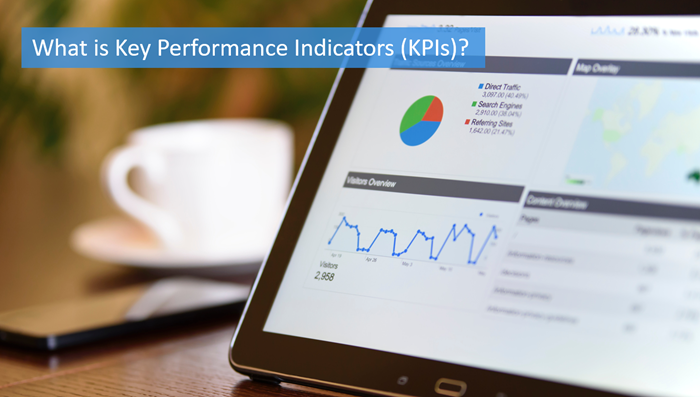
what-is-key-performance-indicators-kpis

Key performance indicators definition (KPI)

Key performance indicator refers to a form of quantifiable performance measurement that companies use to measure tasks that are central to the success of a business and show strategic, financial or operational goals.

The KPIs are selected according to industry standards and are used at both an operational level) and at the staff appraisal level.

Key performance indicator sub-groups

• Quantitative indicators: which can be measured numerically

• Qualitative indicators: which can’t be measure numerically

• Directional indicators: specifies whether an organisation is improving or not

• Process indicators: which measure the efficiency of a specified procedure

Key performance indicator classification

1. Financial perspectives like cost per unit produced, profit per unit sales etc.

2. Internal business perspectives like inventory turnover ratio, manufacturing lead time, sales turnover ratio etc.

3. Learning and growth perspectives like employee turnover, employee skill sets and training requirement.

4. Customer perspective like market share, old customer retention, after-sales services etc.

Key performance indicator steps

1. Defining the business process.

2. Identifying the requirements of the business processes.

3. Determining the qualitative/quantitative measure of the result and comparing with the benchmark.

4. Monitoring, controlling and measuring variance.

See TalentLyft in action

Applicant Tracking, Recruitment Marketing, Sourcing and Talent CRM software are powerful alone, but unstoppable when used together!


Related content

  • Affirmative action is an HR policy which ensures equal employment opportunities and focuses on groups and minorities who tend to suffer from job discrimination.Affirmative action definitionAffirmative...

  • Blended workforce consists of a variety of employees on different types of contracts such as full-time staff, part-time employees, temporary employees, independent contractors and freelancers.Blended workforce...

  • Candidate is a job seeker who has been pre-qualified for a specific position or category of jobs and has been through the application processWhat's a candidate?A...

  • Competency modeling is a framework for defining the skills, knowledge and behavior requirements of a job. Competency modeling definitionCompetency modeling is a framework for defining the skills,...

  • Developmental counseling is a type of shared counseling where employers work together with employees to identify strengths and weaknesses, resolve performance-related problems and determine and create...

Explore more topics

  • Recruitment Metrics

    If you can't measure it, you can improve it. Or something like that. Either way, tracking metrics is in the recruitment process is crucial to see what works and what doesn't. Dive in to this topic to learn all about the most important metrics to track and how they can help you optimize your hiring process.

  • Candidate Relationship Management

    Improve your hiring process with effective Candidate Relationship Management (CRM). Build and nurture strong relationships with candidates by leveraging CRM tools to engage, communicate, and maintain long-term connections. Enhance candidate experience, increase retention, and create a robust talent pipeline for future hiring needs.

  • Video in Recruitment

    Discover how incorporating video can enhance your recruitment strategy. From video job postings to candidate video submissions and virtual interviews, video adds a personal touch, increases engagement, and streamlines the hiring process. Learn how to use video to attract, assess, and connect with top talent more effectively.

  • Mastering the Interview

    Conducting an effective interview means getting the best and most out of a candidate in a limited time frame. To do that you need to ask the right questions. From general questions to more strategic ones, here you'll find all the questions you need to get what you need to help you choose the best candidate.

  • Conducting Interviews

    Interviews are the make-or-break phase of the recruitment process as this is where you truly get to know the candidates and try to get the best out of them. Effective interviews require preparation and use of the right methods and strategies to get the most from a limited time frame. In this blog section, we dive into the art of conducting interviews, exploring the best tactics, the most efficient methods, and useful strategies to make you a better interviewer.

  • Recruitment by Industry

    Tailor your recruitment strategies to fit specific industries. Learn the unique challenges and best practices for hiring in sectors like healthcare, tech, retail, finance, and more. Discover industry-specific approaches to sourcing talent, crafting job descriptions, and optimizing your recruitment efforts for success.

Simple and affordable recruitment software