How to Attract More Female Talents into Tech?
- Guest Author
- March 10, 2020
Why is it important to acknowledge women in tech?
How many women are working in tech?
What keeps female talents from the tech industry?
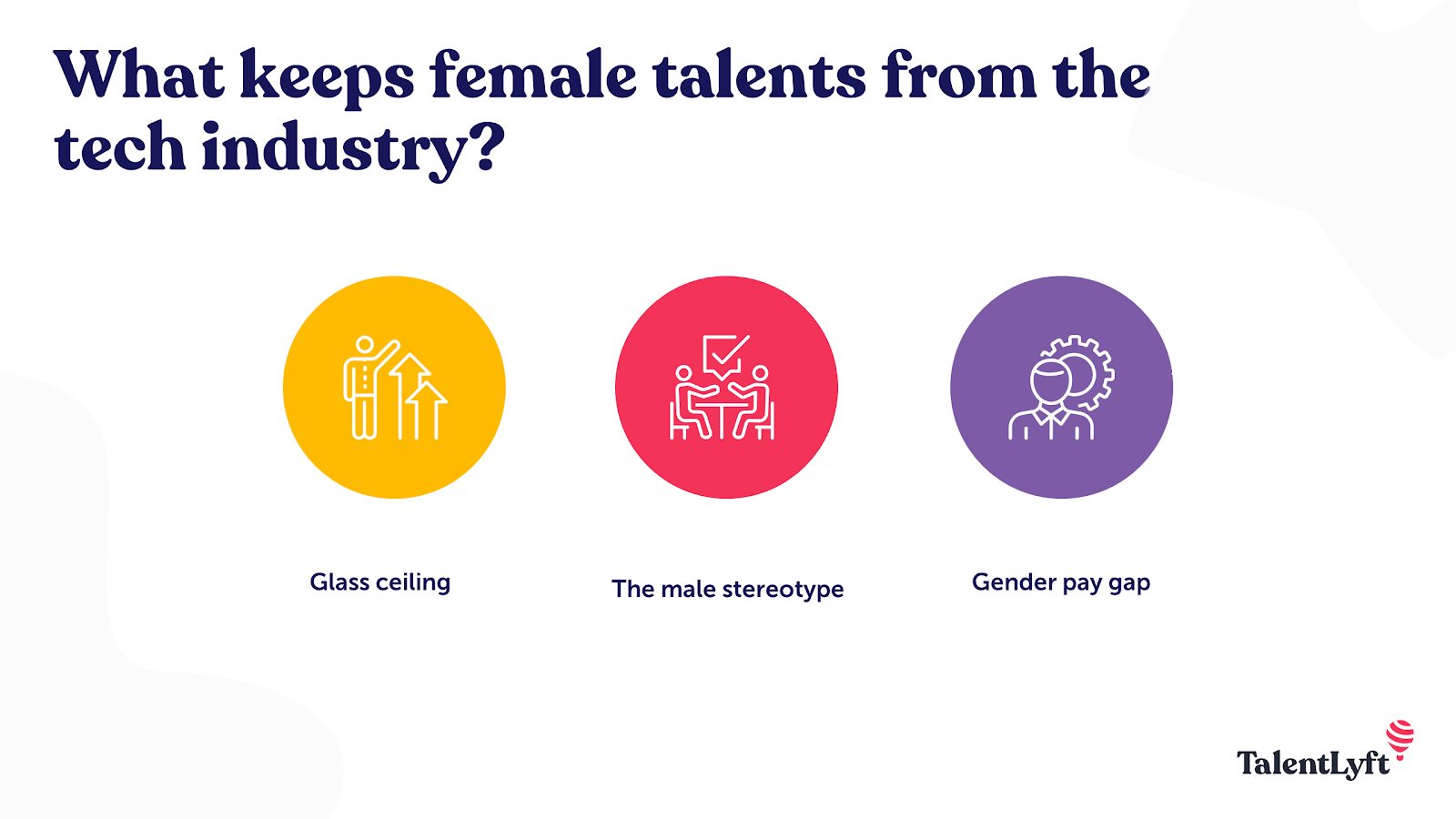
#1 Glass ceiling
#2 The male stereotype
#3 Gender pay gap
So how can we attract more women to join the tech industry?
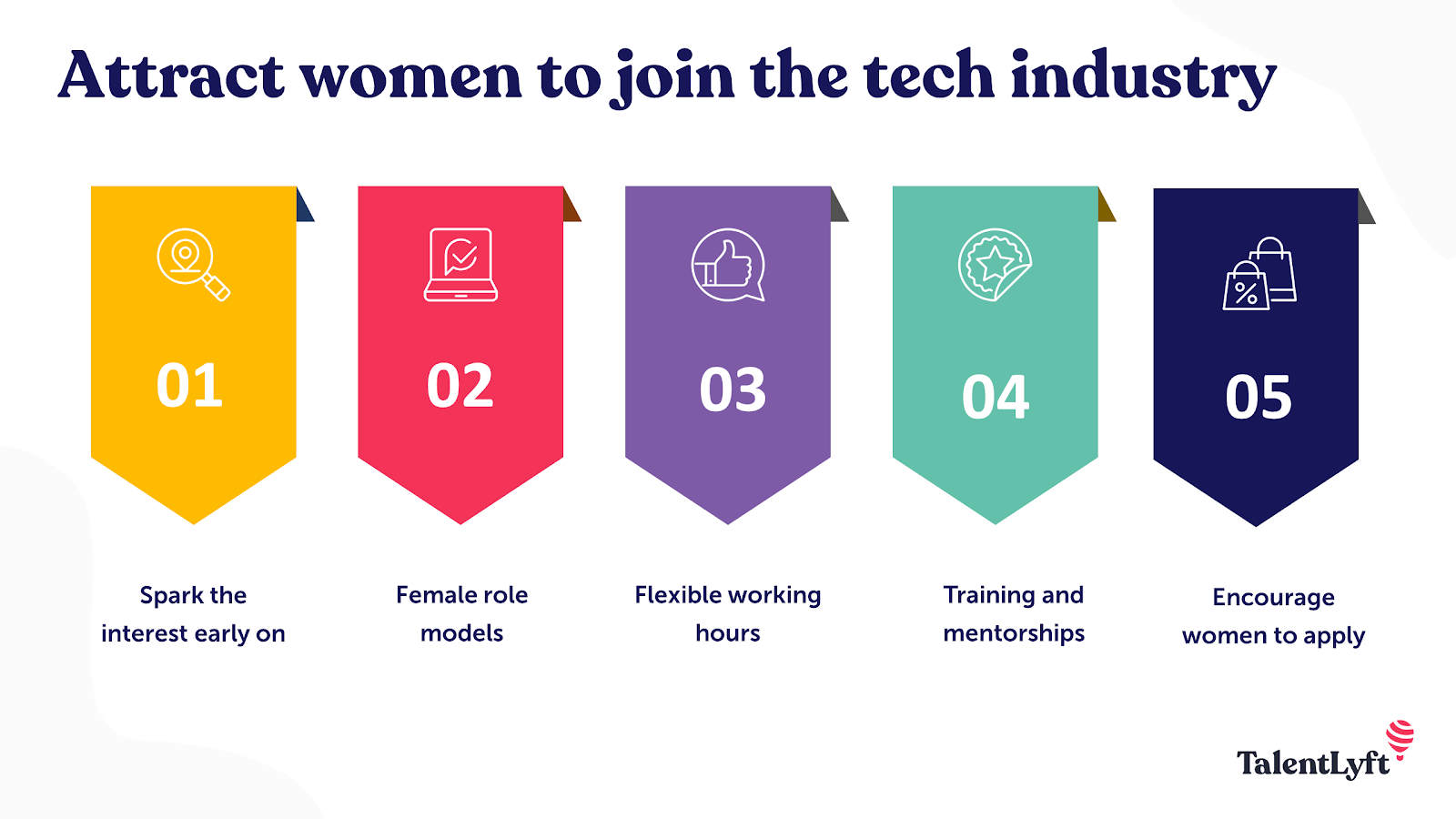
#1 Spark the interest from an early age
#2 Give greater space to female role models
#3 Encourage women to apply
#4 Allow flexible working hours
#5 Training, mentorship and female networks
Conclusion: We need more women in the tech industry!
About the author
Applicant Tracking, Recruitment Marketing, Sourcing and Talent CRM software are powerful alone, but unstoppable when used together!
Women occupy less than 7% of technology jobs in Europe. How can we attract more women into tech and improve the percentage of women working in the field?
Why is it important to acknowledge women in tech?
The 8thof March is international women’s Day – an important day to acknowledge how women are doing in the tech industry. But, why is it important to acknowledge women in tech?
It is important because, even now in the 21st century, technology and women are not a natural match, a misunderstood mindset that grows from a young age.
Looking back at my school years, my interest in STEM subjects (Science, Technology, Engineering and Mathematics) was pretty much non-existing. Mathematics and science were meant for boys, and those who were too much into such subjects got a dork stamp.
How many women are working in tech?
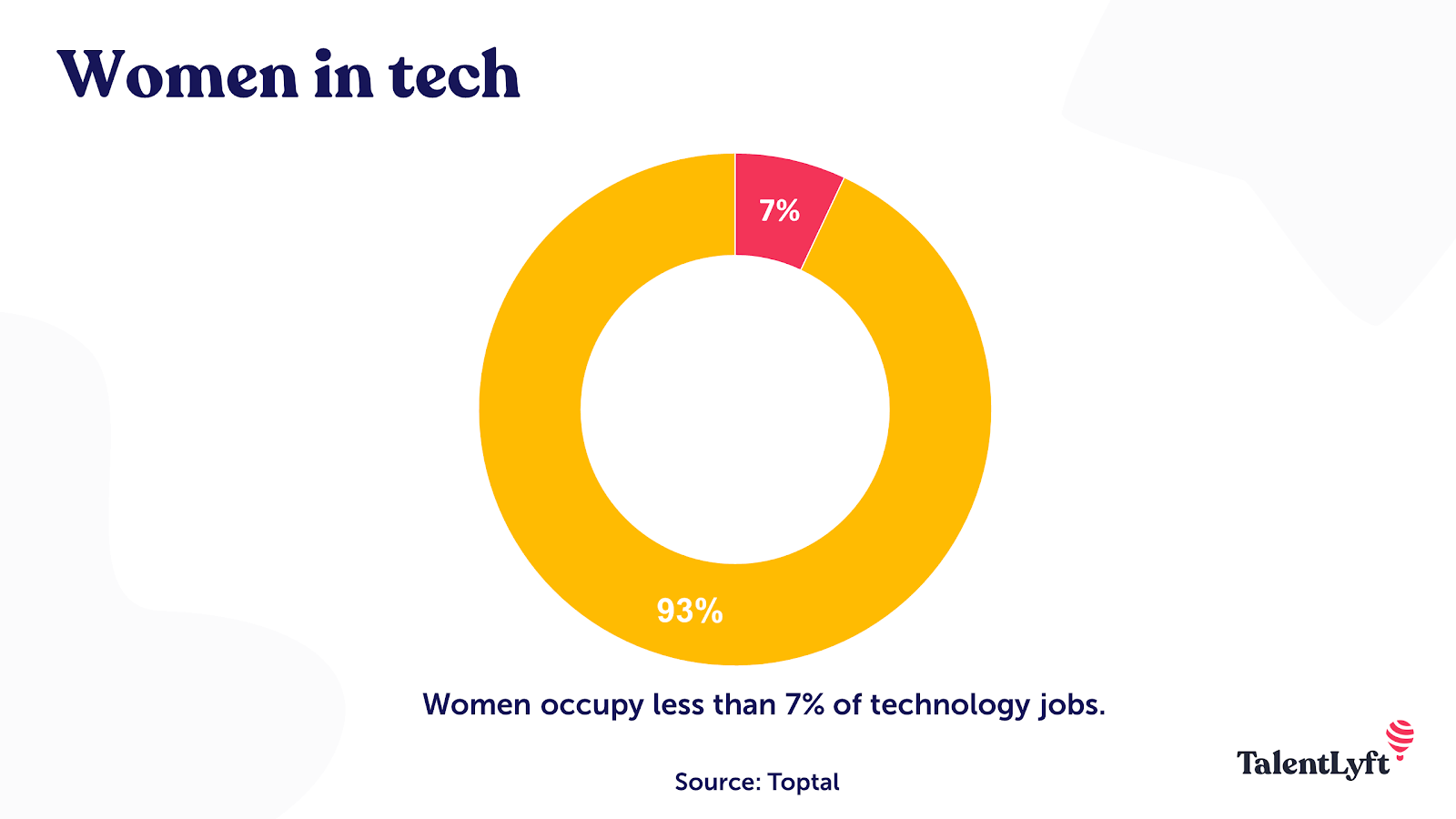
In Europe, women occupy less than 7% of technology jobs. This number is frightening, especially since technology is more important t
han ever today were companies and our society rely on computer-based systems and the online world.
Tech is the industry of the future with endless opportunities to develop and grow. It is an extremely broad industry to learn, change, develop, and niche into your passion. So why do we experience a shortage of resources and competencies to keep up with this development?
Well, by looking at how many women are working in technology-related jobs, we could solve much of the competence shortage by working harder to attract women into technology jobs. Not only attract but retain women who already work in the field.
What keeps female talents from the tech industry?
Here are the top 3 causes that keep female talents from working in the tech industry:
#1 Glass ceiling
It should be a matter of course that each individual, no matter gender, has the same equal chance for promotion. If you have not heard about the term glass ceiling before, it is a term that refers to a systematic barrier that keeps women from moving to senior positions. The step to becoming a manager is the major obstacle many women face and is the reason why many women in technical jobs leave their current workplace.
Although many companies see great value in having more women in leadership positions, women experience obstacles to reaching innovative technical positions and senior positions. In a recent report from Women in Tech, the statistics showed that women have fewer opportunities for promotion, and as much as 78% answered that they believe men earn higher salaries.
#2 The male stereotype
The industry has a strong gender label with the male stereotype being in the center; there is still this picture of the typical computer geek with glasses who sits in the basement and codes. This picture and that young girlshear in school that boys are better at science and mathematics, keeps them from studying or growing an interest in STEM-related subjects.
The stereotype that boys are better than girls in math and science still has been proven to harm girls’ interest in these subjects. Girls believe that they have to be exceptional in “masculine” jobs which makes them assess their abilities much lower than boys.
However, girls who instead hear that both genders are equally capable in math have been shown to have a positive effect on girls’ achievements in math tests. Thus, performance differences between both genders disappear.
#3 Gender pay gap
You could think that we are over the gender pay gap, but that is not the case. Many women in the tech industry say they believe men earn more than women. In a study of UK-based companies, it showed that women have significantly lower salaries in certain technical positions:
- Business development–27%
- Project Management 15%
- Software development–13%
- Data science–9%
Although Hired reported that the pay gap is narrowing, they also reported that 60% of the time men are offered higher salaries for the same job at the same company.
So how can we attract more women to join the tech industry?
Here are 5 effective strategies you can implement to attract more women to join the tech industry:
#1 Spark the interest from an early age
If you do not have anyone in your family who work in STEM-related jobs, it will be pretty hard to grow a technology interest. Today, I understand that my lack of interest depended on that I did not have anyone in my family who had an interest or knowledge in STEM subjects.
Family members have a huge influence on children to become interested in STEM subjects. If the family is not able to do it, it has to be up to the schools to prevent negative stereotypes and encourage girls to grow an interest in such subjects.
For instance, when I look at my six-year-old daughter, who is extremely fascinated and interested in mathematics, it does not come from me because I still struggle with it. Her father, on the other hand, is very good at math and has a huge interest in the technology field. He has been very consistent with sparking a math and technology interest in our daughter, but he does it in a fun way that creates curiosity to learn and explore.
#2 Give greater space to female role models
Men dominate the industry, with mostly male leaders featured in the media. Unfortunately, many young girls with an interest in technology meet resistance by people around them, in school and online. These girls need female role models, and we need to become better at spreading their stories. Because if we don’t, it can result in a continued lack of interest and a belief that you will not succeed in the tech industry as a woman.
Maybe you heard about One Login’s marketing campaign in 2015? The software company launched a recruitment campaign that featured a female engineer. The campaign received major backlash from people, especially males, who had opinions about what an engineer should look like. After this backlash, a hashtag named “#ILookLikeAnEngineer”, became virtual all-around social media to raise the voice about gender discrimination in the tech industry.
I do not think that many know that women played an important role in technology in our history. For instance, some of the most influential women in computer science are:
- Ada Lovelace –The world’s first computer programmer
- Radia Perlman –Called “The mother of the internet” after creating the algorithm behind the Spanning Tree Protocol
- Dr Grace Hopper –one of the first programmers on the Harvard Mark 1 Computer
If you want to learn more about the history of women in the tech industry, I recommend looking at this video:
I believe this truly shows that we still have a lot to work on when it comes to gender diversity in STEM and women must be given greater space in media, at workplaces and in schools to remove this negative stereotype.
We need to become better at showing the great opportunities that are available in the industry and support women who want to choose STEM as a career path.
#3 Encourage women to apply
Using appropriate language in job descriptions is essential to attract more women into technology jobs. Research that LinkedIn conducted showed that women are unlikely to apply for positions unless they have all the required skills, whereas men will apply if they have 6 of 10 skills.
Therefore, it is crucial to minimize bias by having gender-neutral language. Only by separating the must-have skills and the nice-to-have skills could impact women’s decision to apply for a job.
Another way to attract more women into tech is to communicate in the job postings that female applications are encouraged.
Diversity in teams has been proven by research to have a positive effect on creativity, innovation and performance. Furthermore, the most talented people are driven to organizations that care and work with diversity.
#4 Allow flexible working hours
Unfortunately, many companies still opt out of women with families because they are afraid that there will be many “staying at home with children” hours. Women, in general, take most of the responsibility with child care and the working hours are often something that keeps women away from certain jobs. But this does not mean that they are not able to perform a great job.
People who are given flexibility in their jobs have higher job satisfactionwhich will increase engagement and performance. Therefore, allow women to have flexible working hours to be able to balance work and family.
#5 Training, mentorship and female networks
Women believe they have fewer opportunities for promotion which should not be the case. Organizations that offer mentorships and training for women to advance them to senior positions will both attract more women and retain current employees.
Mentorships and training at workplaces can remove feelings of being underqualified in their positions but also enhance the overall skills in the organization.
Conclusion: We need more women in the tech industry!
The tech industry still has a great journey ahead to attract more women into tech, which is essential to keep up with the fast-paced technological world we live in today.
While this article has shown five ways we could go about attracting more women, there are numerous other ways organizations can do to improve the percentage of women working in the field.
About the author
Linnea Johansson is Digital Communication Manager at onsiter.com – a marketplace connecting IT contractors and businesses.
Applicant Tracking, Recruitment Marketing, Sourcing and Talent CRM software are powerful alone, but unstoppable when used together!


