How to Become a Pro at Talent Scouting?
- Guest Author
- March 1, 2018
Why is talent scouting important?
What is talent scouting?
How to become a great talent scout?
Tips for becoming a great talent scout
Tip #1: Scout for the future
Tip #2: Find a good cultural fit
Tip #3: Keep networking
Tip #4: Hire for character, train for skill
Tip #5: Train others
Conclusion
About the author
Frequently asked questions
Applicant Tracking, Recruitment Marketing, Sourcing and Talent CRM software are powerful alone, but unstoppable when used together!
How to become a pro at talent scouting is a major concern of today’s modern recruiters. This article sheds light on how HR professionals can find and hire the right people with the potential to grow into major contributors on their team and in their company.
Why is talent scouting important?
From businesses to sports teams, music companies to movie studios, everyone is looking for their next rising star. And the onus of finding this big star lies on the shoulders of a talent scout.
Many business organizations have successfully developed a systematic approach to talent scouting – often led by Human Resources.
Still, finding the right job candidates isn’t easy, even if you conduct a long, carefully orchestrated search. To find these people, you must develop a long-term consistent strategy.
Additionally, the shortage of talent is undoubtedly one of the biggest challenges for today's recruiters!
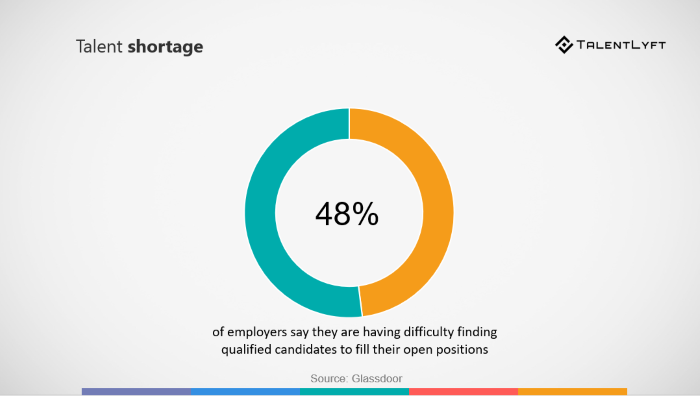
This is why it is important to excell in the art of headhunting .
The article sheds light on how HR professionals can i dentify and hire the right people with the potential to grow i nto major contributors on their team and in their firm.
What is talent scouting?
A perfect analogy for talent scouting would be the case of a professional sports team where scouts search for and follow a prospect for a long time hoping they develop into an A-lister over time.
Organizations that truly succeed in finding great talent are the ones that not only scout to fill their immediate positions but also look for candidates who can potentially be groomed as future leaders.
Going by the wise words of Anthony Lucadello, a professional baseball scout for the Chicago Cubs and Philadelphia Phillies, we can identify four different kinds of scouts:
- Poor – wastes time looking for games rather than having a planned itinerary
- Picker – emphasizes a player's one weakness to the neglect of all strengths
- Performance – bases his evaluation on what a player does in his presence
- Projector – envisions what a player will be able to do in two or three years.
How to become a great talent scout?
Effective HR managers are deeply invested when it comes to building a framework to meet future demands. They are constantly scouting for prospects who have displayed potential, aren’t scared of taking calculated risks, and know that sometimes the best talents can be found in the most unlikely of places.
Tips for becoming a great talent scout
Tip #1: Scout for the future
"A good hockey player skates to where the puck is. A great hockey player skates to where the puck is going to be.” – Wayne Gretzky.
Scouting talent for your organization has to be a forward-looking activity. In all fairness, finding a great candidate is not an easy task, and therefore, you need to start looking for them in advance.
It’s similar to how managers of great sporting teams do it – looking at the future to build a pool of talent from your existing bench strength. In a similar vein, you need to start proactively scouting for the talent needed to support your functions in the days to come.
If you happen to be among those who prefer to wait until the job posting happens, you are already too late!
Tip #2: Find a good cultural fit
The best talent scouts are always on the lookout for people who fit right into the company’s cultural landscape. They can figure out if a potential candidate is able to express and exhibit the characteristics, compatibility traits, and values that exist within an organization in order to hire the best talent by finding the perfect fit.
As a successful talent scout, you want to hire only those candidates whose beliefs and personalities are congruent with your company culture. As an example, you would not hire someone who prefers to go solo in an organization that relies on team collaboration.
Tip #3: Keep networking
The best talent scouts are also excellent networkers.
Over the years I have developed a habit of inviting at least one person from any industry (marketing, sales, finance, HR etc.) to lunch or dinner, every month. This is a time when I get to discuss with them about their work, among other things.
This has helped me develop a pretty good understanding of the talent pool.
I try to keep the practice of networking with others even when there are no positions required to be filled, for the simple reason that I can learn so many new things every time I meet a new person.
Tip #4: Hire for character, train for skill
The best talent scouts focus on character and not just pedigree. Over the years I have come to the understanding, that often the best hires are not those with just the right set of skills.
To me, personality is more important than skills .
The focus lies on the applicant’s personality, demeanor, overall experience, hunger for success, ability to adapt, drive, analytical ability, and creative thinking. If these characteristics are present, then teaching specific work skills is never a problem.
Tip #5: Train others
Professional talent scouts are happy to pass on the “secrets”. It’s important that they involve everyone else responsible for, or involved in the, hiring as well. They should encourage others to follow their lead and emerge as their own talent scouts.
A good way to initiate this is by creating online courses that every other concerned member of the organization can access. Most companies have some kind of an online learning system that they employ for internal training which can come in handy. With time, it’s possible to create a culture of finding and grooming the best talents in advance organization-wide.
Conclusion
Finding and hiring the ideal job candidate for your organization isn't an easy job. However, with the right approach, it’s possible to become skilled in this art. I hope that the pointers above help you become a more successful recruiter by becoming a better talent hunter. Mastering the skills of talent scouting is something you'll be thankful for in the long run. And so will be your bosses!
About the author
Kamy Anderson is an ed-tech enthusiast with a passion for writing on emerging technologies in the areas of corporate training and education. He is an expert in learning management system & elearning authoring tools – currently associated with ProProfs.
Frequently asked questions
Why is Talent Scouting Critical for Businesses?
Talent scouting is crucial as it helps businesses and various organizations like sports teams and music companies find their next stars, who are vital for growth and success.
What does Talent Scouting entail?
Talent scouting involves a long-term, consistent strategy to identify individuals with the potential to become future leaders or A-listers, similar to scouting in professional sports.
How can one excel as a Talent Scout?
Excelling in talent scouting requires a forward-looking approach, focusing on identifying and nurturing potential talent, and maintaining a proactive stance in talent acquisition.
What are key strategies for effective Talent Scouting?
Key strategies include scouting for future potential, ensuring a good cultural fit, continuous networking, and hiring based on character rather than just skill set.
How can Talent Scouts improve their effectiveness?
Talent scouts can improve by training others in their organization, creating a culture of proactive talent scouting, and employing systematic approaches to talent acquisition.
Applicant Tracking, Recruitment Marketing, Sourcing and Talent CRM software are powerful alone, but unstoppable when used together!


