How Your Company Retains Top Talent With the Right Compensation Software
- Guest Author
- June 18, 2021
Your Compensation Decisions Impact Your Entire Organization
How To Retain Top Talent With the Right Compensation Strategy
Compensation Is More Than Monetary
Don’t Make These Compensation Planning Mistakes
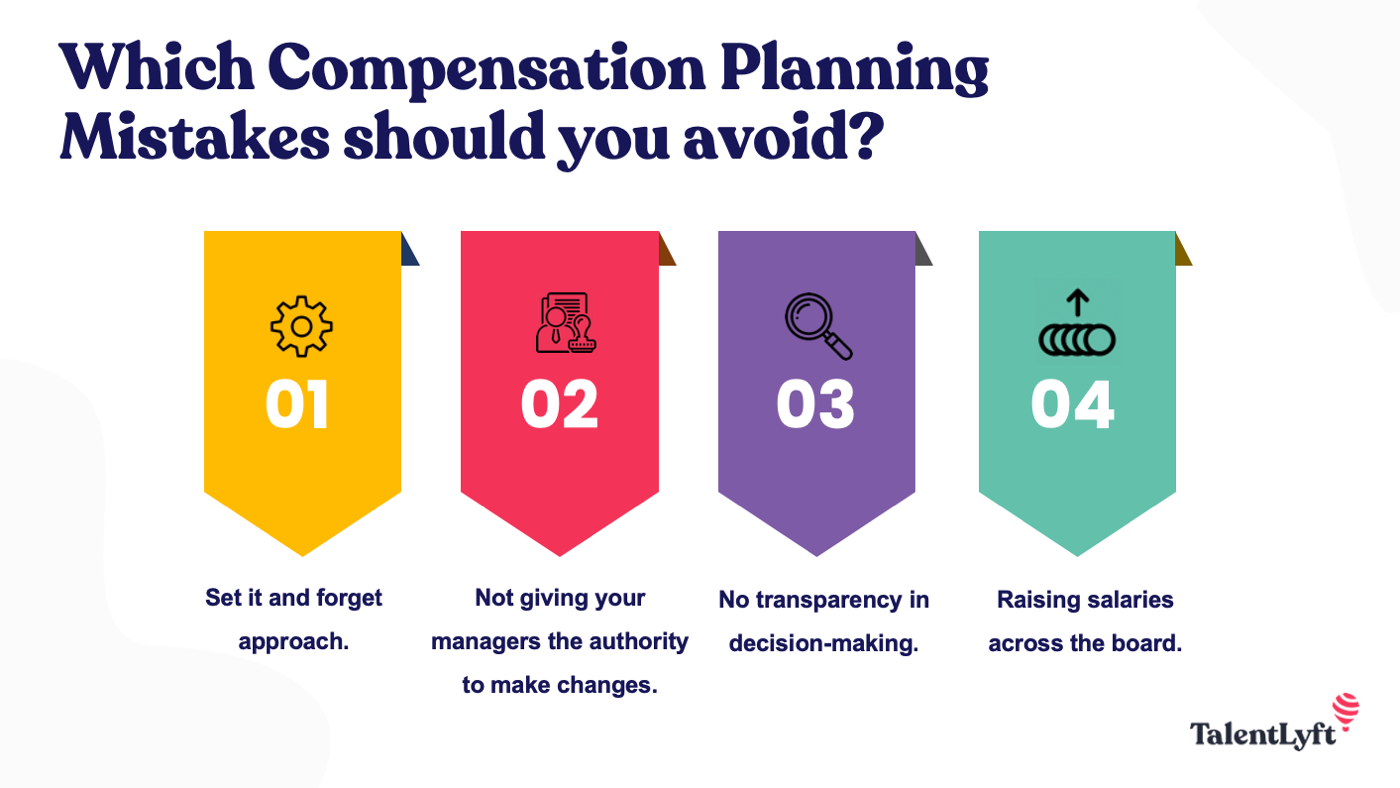
The set it and forget it approach.
Managers are not given the authority to make changes.
No transparency in decision-making.
Raising salaries across the board.
Why Use Compensation Management Software?
Final Thoughts
About DecuSoft’s Compose
Applicant Tracking, Recruitment Marketing, Sourcing and Talent CRM software are powerful alone, but unstoppable when used together!
Your compensation strategy is an important part of your organization’s overall success. Compensation planning involves more than just employee salary, health insurance, or bonuses you provide. Compensation programs represent the entire philosophy of your company’s values as it strives to achieve short and long-term objectives. Large enterprise organizations and small businesses should be aware of the ways talent acquisition and workforce management can be impacted by your compensation strategy. In this article, we will be discussing the ways your company can retain top talent with the right compensation management solution.
Your compensation plan is complete when it has a philosophy, strategy, guidelines for pay, policies, and processes. The strategy should also be able to respond to the following questions:
- What are our organization’s values, and how do we want to reward them?
- What compensation options will improve retention, employee motivation, and help attract top talent?
- Do we want to focus on compensation allocation for the jobs that are business-critical? How?
- Do we want to push initiatives for pay equity? How will we complete these goals?
- Is this philosophy different for salaried employees and those on sales commission?
Your Compensation Decisions Impact Your Entire Organization
In what ways does your compensation strategy impact your performance management and talent management strategy?
Successfully onboarding and recruiting qualified employees improves your workforce’s quality and helps streamline operations. Employees who are smarter, faster, and more capable make better decisions and generate more revenue. To attract exceptional talent, human resources departments and human capital management officers must offer a total compensation package that is personalized and superior to that of your competitors.
To determine if your total rewards strategy is competitive with others in your industry, HR professionals should begin by:
- Benchmarking compensation data
- Reviewing employee experience
- Reading job descriptions for similar positions
- Analyzing market data
- Global compensation data
- Overall position functionality
How To Retain Top Talent With the Right Compensation Strategy
Increasing morale and satisfaction helps to maintain high output.
More goods are sold, less time is spent recruiting and training, the decision-making lifecycle is streamlined, employee engagement improves, workflows are simplified, and many other advantages result from happier employees. Rewarding top performers in your compensation strategy encourages everyone to perform at their highest level. Your top performers should be rewarded with merit bonuses or long-term incentive plans equal to their contributions. Those who are on a bonus structure should be rewarded for meeting their targets. This “carrot” mentality will only encourage more “B” players to progress to “A” status. Variable compensation plans are a flexible option that allows companies to link rewards to the metrics that are most important to their success.
Your pay-for-performance plan should be at the forefront of your compensation strategy.
Maintaining peak motivation will help you avoid losing time. Where is the incentive for an employee to give it his or her all if he or she is paid a set salary regardless of performance? Most people put in the same amount of effort in order to avoid being fired. That’s not the kind of attitude you want on your team. Offer a motivating compensation and benefits structure to combat time wasters.
Reduced turnover and increased loyalty prevent the loss of institutional knowledge.
Any member of the management team will tell you that, while turnover is unavoidable in any business, it is critical to reduce turnover when possible. Businesses can avoid costly and time-consuming recruiting and training by relying on institutional knowledge. Simplify your onboarding process and ensure institutional knowledge is retained in the organization.
Career succession planning helps to close gaps in talent.
Transitions are much smoother when candidates are developed to replace retiring or departing managers. Keeping your internal stars happy by advancing them up the compensation ladder helps you prepare for inevitable departures. If the replacements are better, smarter, and faster than the ones who left, you’ll even come out ahead.
Compensation Is More Than Monetary
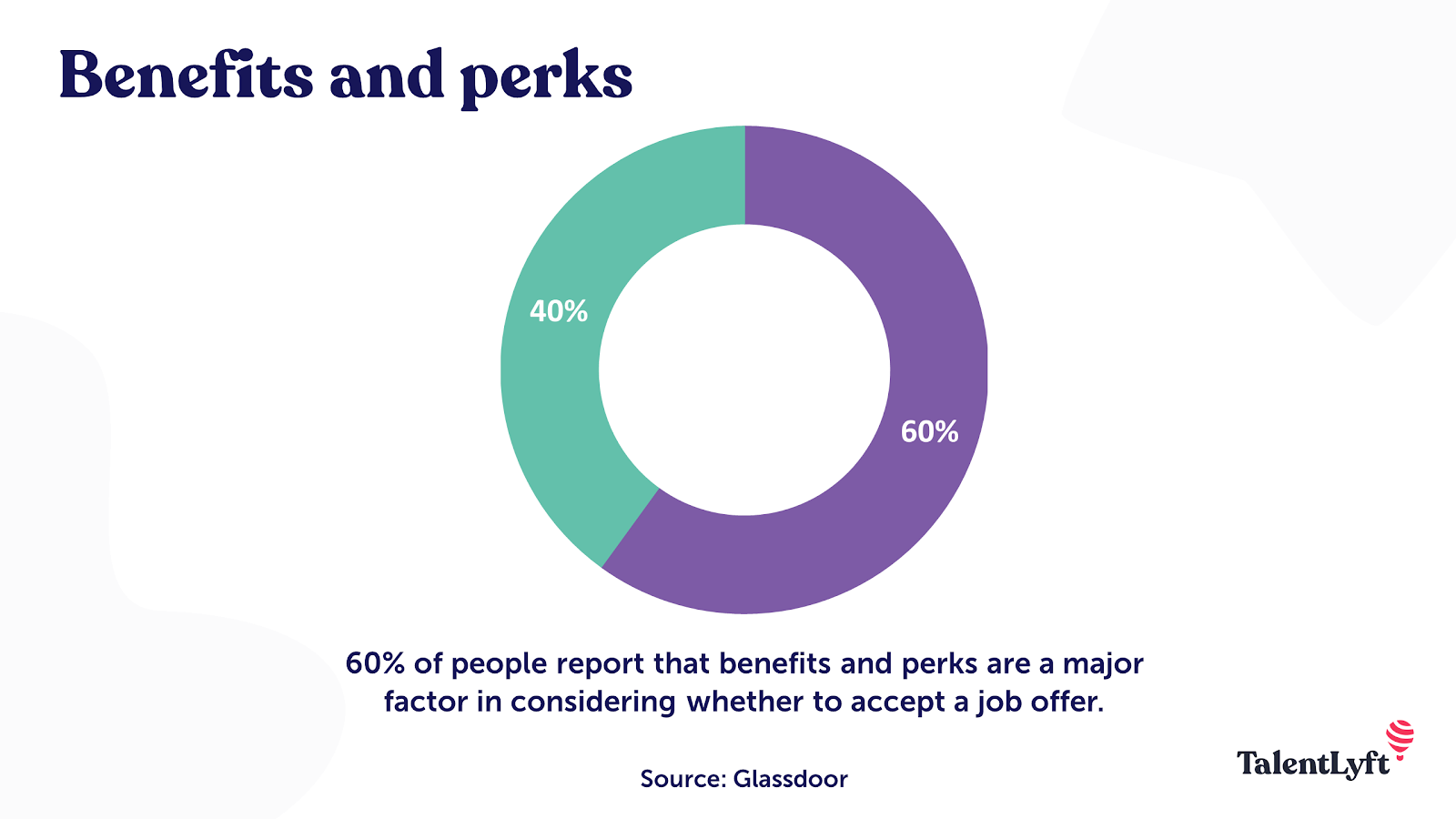
Today’s employees are looking at more than just what’s in their paycheck when judging a company’s compensation plan. Auxiliary benefits and special perks have become more prominent in recruiting and retaining talent. A Glassdoor survey found four out of five people would prefer better benefits over a higher salary (1). Everyone benefits when you figure out what kind of non-monetary incentives inspire your staff and then use it. You may efficiently onboard and keep employees based in part on first-rate non-monetary remuneration, whether you give vacation time, work/life balance schedules, permissive work-from-home rules, corporate benefits, professional development, or anything else. Employees that are happy are more motivated, loyal, and productive. Don’t let this truth cause you to slip behind your competition.
Here are some of the most popular or unique benefits being offered today:
-
Fully covered health care
-
Stock options/equity
-
Parental leave
-
Matching 401K
-
Flexible workday
-
Transit reimbursement
-
Work from home
-
Unlimited PTP
-
Employee pricing
-
Childcare reimbursement
-
Student loan repayment
-
Wellness benefits
-
Professional development
Don’t Make These Compensation Planning Mistakes
The set it and forget it approach.
Not updating your compensation plan to track real-time organizational changes and goals. A well-rounded successful compensation plan needs more, not a set it and forget it approach. Your compensation plan should be treated as a living document and updated by HR professionals regularly to reflect organizational priorities. Install, monitor, and fine-tune your system. Because markets evolve, it’s critical to conduct regular pay audits to verify that salary ranges match current compensation patterns in a given field.
Managers are not given the authority to make changes.
The rules of this competition are flexible, and they can be broken as required. Give your recruiting supervisors and management team the authority to make changes as needed. Collect information from managers and staff on what may be improved. Employees should have access to HR portals so that they may self-serve as necessary. Your compensation plan is not a one-time conversation, once again. It will constantly require revisions and updates with input from all stakeholders.
No transparency in decision-making.
Employees are happier when they are adequately informed about the pay-setting process, according to research by Mercer, an HR consulting business (2). This is true even if they disagree with the size of a pay raise or the time schedule. Employees will be more engaged and happy with their compensation evaluations if they know there is a documented procedure to which they have access.
Raising salaries across the board.
Obviously, you want to keep your best employees. They’ve played a critical role in your company’s progress. Make sure you recognize the best performers while creating your strategy. This will come at the expense of your worst performers, which is OK. A tiered structure with merit increases depending on performance is the most logical method to achieve this. A method like this will keep your sales staff engaged while also encouraging healthy competition.
Why Use Compensation Management Software?
According to Deloitte, compensation typically accounts for nearly 70% of a company’s total expenses (3). Compensation management software allows you to manage complex compensation plans across departments and incentive plan structures in a streamlined manner. Many companies now use spreadsheets to manage their employee compensation plans. This isn’t necessarily a bad approach, but it can lead to unforced compensation errors, regulatory compliance issues, security issues, a lack of audit trail, and version control issues if you have multiple compensation plans or significant complexity.
Compensation software can make it simple to manage complex compensation plans, while also ensuring that employees are paid fairly for their work and their incentive plans are properly implemented without pay gaps. Spreadsheets were never designed to be an enterprise HCM budgeting solution, and Compensation Management software can make it simple to manage complex compensation plans while also ensuring that employees are paid fairly for their work and their incentive plans are properly implemented. They also improve data integrity, reduce risk, and save you time and money when it comes to managing your compensation processes.
Final Thoughts
It is critical for a company’s success to hire and retain high-performing employees. It’s critical for your company to develop a comprehensive compensation strategy that takes into account salary, benefits, bonuses, and perks. Compensation plans should never be left to their own devices.
About DecuSoft’s Compose
Compose by DecuSoft is a specialized compensation management software solution that simplifies the administration of complex variable pay programs including Merit, Bonus, Short-term, and Long-term incentives. Compose is not a modular software suite like other traditional human capital management solutions, Compose is a full suite compensation management system automation solution. Compose easily integrates with existing ERP, HRIS, financial, and human capital management solutions allowing you to leverage your investment in existing processes and systems. Compose includes modeling capabilities, a workflow approval process, full audit capability, proxy functionality, flexible user preferences, enhanced filtering and sorting, real-time summaries, the ability to manage multiple metrics, and comprehensive total compensation reports. Automate your compensation management system with Compose by DecuSoft.
Applicant Tracking, Recruitment Marketing, Sourcing and Talent CRM software are powerful alone, but unstoppable when used together!


