What Should an Employee Handbook Consist of?
- Anja Zojceska
- October 30, 2018
How to write a great employee handbook?
What to include in your employee handbook?
Top 5 employee handbook templates
Employee handbook template #1
Employee handbook template #2
Employee handbook template #3
Employee handbook template #4
Employee handbook template #5
Most important employee handbook policies
What makes an employee handbook great?
How to write a great employee handbook?
Good practice examples: Basecamp’s employee handbooks
Frequently asked questions
Applicant Tracking, Recruitment Marketing, Sourcing and Talent CRM software are powerful alone, but unstoppable when used together!
If you want to learn how to write a great, engaging employee handbook, you’ve come to the right place. First, you will learn w hat should a great employee handbook consist of. Then, you’ll learn how to write it in an engaging way!
How to write a great employee handbook?
An employee handbook is without any doubt the single most important document of any company. Employee handbook , also known as a staff manual, is a document which defines and communicates your company’s policies.
However, a great employee handbook is more than a list of boring company’s policies. If written well, employee handbook sets the tone of your company culture and explains your values and preferred workplace behavior. As such, it is an integral part of your employee onboarding process which serves as a useful recruiting and retention tool.
In this blog post, you will learn what should an employee handbook consist of and what type of content should it include. This article will also offer useful templates and writing tips to help you get started and write an amazing employee handbook for your company!
What to include in your employee handbook?
Most employee handbooks serve as a repository of your company’s formally written policies.
They are boring and difficult to grasp because of many technical and legal terms. This is the reason why most employees don’t read employee handbooks.
According to the research from GuideSpark:
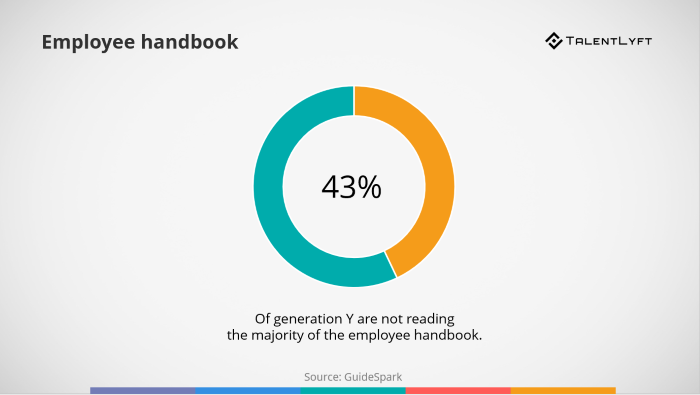
- 43% of generation Y are not reading the majority of the employee handbook
- 11% of generation Y haven’t even opened an employee handbook
If you want to have a great employee handbook, the one that your employees will really read, then your employee handbook should include more than just boring company’s policies.
It should go deeper and explain why you have those policies and why they are important. It should also outline your company’s mission, vision and core values.
Thus, employee handbook should include information on:
- Your company’s history, mission, vision and goals
- Your company’s core values and culture
- Human resources and legal information related to employment
Download this guide about GDPR compliance, and learn about what this new Data Protection Act means in the world of recruiting and hiring. - Your company’s policies
- Employee benefits and perks
Top 5 employee handbook templates
To help you get started with writing your company’s employee handbook, we gathered a few of the best free employee handbook templates.
However, we strongly advise you to use this template only as a guide. Check them out and use them as an example to outline the structure of your own employee handbook. Don’t just copy-paste them and insert your company’s name – it is a really bad practice.
That being said, here are the top 5 free employee handbook templates:
Employee handbook template #1
The National Council of Nonprofit Associations employee handbook template
Employee handbook template #2
RocketLawyer employee handbook template
Employee handbook template #3
Lessonly employee handbook template
Employee handbook template #4
Society for Human Resource Management (SHRM) employee handbook template
Employee handbook template #5
i-Sight employee Handbook Template
Check out more employee handbook examples and templates!
Most important employee handbook policies
Most HR professionals’ biggest challenge in writing employee handbooks is deciding which policies to include and how to write them.
To help you get started, here is the list of the most important and most common policies that are usually found in employee handbooks:
- General employment policies and practices
- Anti-Discrimination policy
- Anti-harassment policy
- Discipline policy
- Health and safety policy
- Compensation policy
- Employee benefits policy
- Work conditions and hours
- Attendance and leave of absence policy
- Work performance
- Business policies and procedures
- Communication policies
- Non-disclosure policy
- IT policy
If you want to see a sample of these policies, check out our Human Resources (HR) Policies and Procedures templates .
Make sure that you don’t just copy-paste these policies. Each company has specific rules and regulations, so make sure to adjust these templates to fit your company’s needs.
What makes an employee handbook great?
A great employee handbook is useful and engaging. It effectively communicates your company’s values and helps your employees understand your company culture. It also set clear expectations. After reading your employee handbook, your employees should know exactly what is expected from them and what they will get in return if they oblige.
How to write a great employee handbook?
To write a great employee handbook, you should do more than copy-paste an employee handbook template. You should rewrite these templates in accordance with your company’s employer brand.
Here is how to do it:
- Modify the template’s language to match your employer brand’s tone of voice
- Include real-life photos of your employees and workplace
- Use your company’s colors and fonts
- Be creative and make your employee handbook unique
Good practice examples: Basecamp’s employee handbooks
We couldn’t resist sharing with an example of one truly unique employee handbook – Basecamp’s employee handbook .
Take a look at the main sections of the Basecamp’s employee handbook:
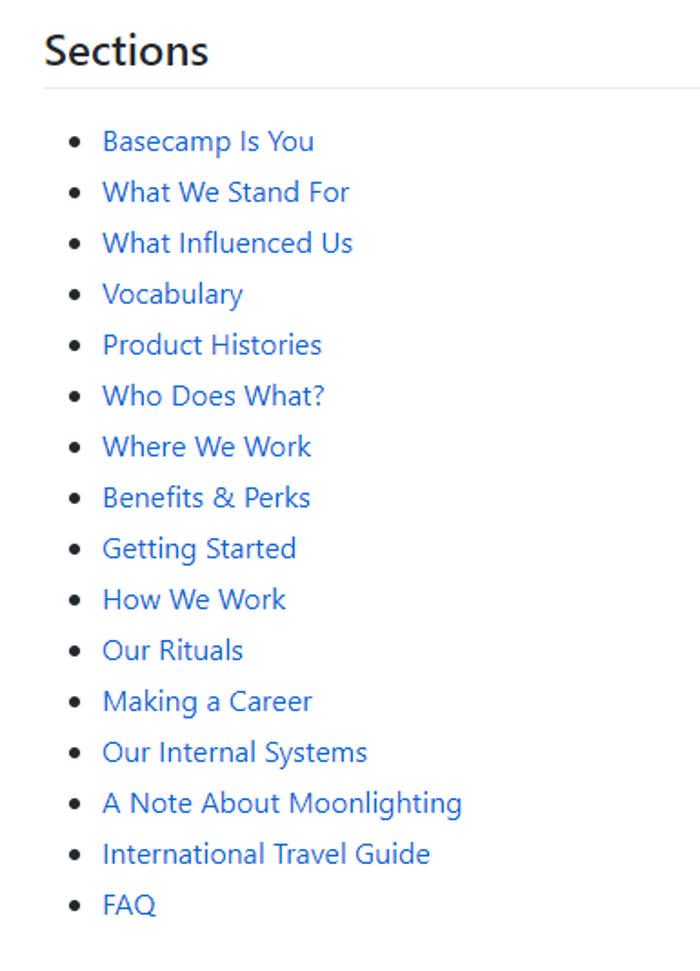
Their handbook is written in an informal tone of voice and it really shows of this company’s personality and makes it stand out from other employers.
Here is what their new employee, a programmer Rosa said about it:
I had access to the employee handbook weeks before starting, and I loved that. I read it several times, not only because it was informative, but also because it made me feel super happy and excited about joining.
Hopefully, this example will inspire you and help you build up the courage to step out of the box and write a great employee handbook for your own company!
Frequently asked questions
What is the purpose of an employee handbook?
An employee handbook communicates a company’s policies, culture, and values, serving as a guide for employees’ behavior and expectations.
What key elements should an employee handbook include?
It should include the company’s mission, values, HR and legal information, policies, and details on benefits and perks.
How can an employee handbook support company culture?
By clearly stating the company’s values and expected behaviors, it reinforces the culture and guides employee actions.
Why is clarity important in an employee handbook?
Clarity ensures employees understand their rights, responsibilities, and the company’s expectations, reducing misunderstandings.
How can an employee handbook improve employee onboarding?
It provides new hires with essential information about the company and their role, helping them integrate smoothly.
Applicant Tracking, Recruitment Marketing, Sourcing and Talent CRM software are powerful alone, but unstoppable when used together!


