How to Recognize Top Sales Talent by Their Resume?
- Guest Author
- June 29, 2018
Applicant Tracking, Recruitment Marketing, Sourcing and Talent CRM software are powerful alone, but unstoppable when used together!
Recognizing top sales talent is not that hard if you know exactly what to look for in their resume. In this blog post, you will learn about the 5 key indicators that will help you choose the best candidates for your sales team.
The problem with hiring top sales talent
So you’re looking to add some new talent to your sales team. That’s great!
But finding and hiring the ideal job candidate isn’t easy.
You will likely receive a lot of resumes to fill your sales position.
The problem is that you don’t have the time nor the desire to interview dozens, or even hundreds, of candidates.
How can you narrow down the candidate pool down before you actually start interviewing people? And make sure that you will interview only the top sales candidates?
How to recognize top sales talent?
Luckily, it is possible to identify top sales talent by their resume.
Make sure you are looking at their resume for indications of loyalty, achievements, relevant experience, and personality traits, while keeping an eye out for red flags.
5 key indicators for recognizing best sales candidates
There are 5 indicators successful recruiters rely on to recognize top sales candidates resumes:
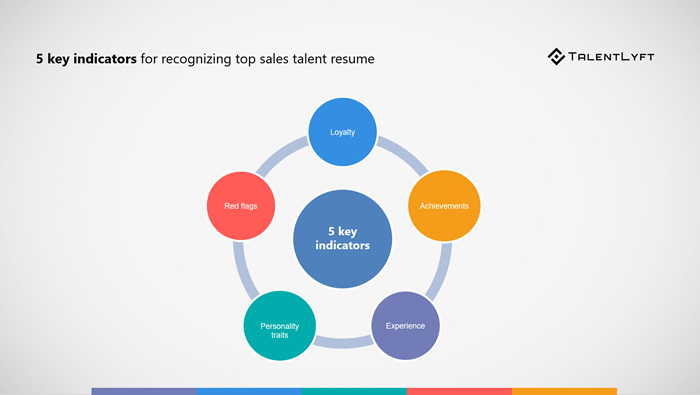
We will briefly describe each one of these indicators so you know exactly what to look for!
1. Loyalty
If you’re going to go through all the trouble of pouring over resumes and interviewing candidates, you will want to find someone who is going to stick around for awhile. You’re looking for someone who will be with your company for the long run.
Take a look at the candidate’s employment history and watch out for resumes with lots of quick stints. It could just be a young person figuring out what kind of company suits them, but it could also indicate that they are not willing to work through challenges.
Loyalty is an important quality. There’s not much point in hiring a great sales professional if they are just going to bail at the first sign of conflict.
2. Achievements
“Look for concrete achievements in their resume. Top level salespeople often win awards and you can bet if they have them mentioned in their resume. You also want to look for successes such as landing big deals or clients,” recommends Chris Foley, HR from Assignment Help.
Has the applicant worked for prestigious companies or represented important clients? Look for their pitch; they should have a quick summary that explains how they can bring revenue and growth to your company.
One of the biggest factors is their career trajectory. Look for candidates who have been moving upward in their career, as this is a strong indicator of drive and determination.
3. Experience
You’re looking for top-level talent, but it’s also important to take into consideration what type of experience they have. It’s a big positive if they have relatable experience with a similar company, dealing with similar products and services. Don’t disqualify them just because their experience is with a company you are not familiar with.
Do a little research and you may find that they have experience with a similar product and customer base. Look at their resume and gauge their knowledge and experience by the kind of language they use. Do they use terms such as ACV and QBRs in the correct context?
Fluency in industry jargon and sales concepts is a positive indication that the candidate has a proven interest in learning about sales and improving their knowledge and abilities.
4. Personality traits
Yes, it is possible to get a reasonable idea of a candidate’s personality and attributes before you bring them in for an interview.
And it’s a good thing too since personality and disposition are a big part of what makes someone top sales talent material.
Involvement in activities such as team sports is a good indicator of a good candidate, as is any kind of leadership role or experience speaking in front of people.
5. Red flags
Keep your eyes peeled for indicators that the applicant is unsuitable for your company.
First, make sure that your candidate’s resume is truthful .
Look out for is a resume loaded with “soft skills” and lacking hard numbers and results. Quality sales candidates will include their sales numbers prominently, along with context such as quotas.
Also watch for resumes loaded up with irrelevant information, such as detailed information about irrelevant jobs from many years ago.
“Lots of useless information can indicate they are trying to fill up their resume to make up for a lack of real skills and experience. Gaps in employment, without good explanation, can indicate problems with achievement so beware,” advises Jennifer Rowley, resume writer at UKTopWriters and BestBritishEssays.
Key takeaways
You will likely receive a lot of resumes to fill your sales position, but you don’t have the time nor the desire to interview dozens, or even hundreds, of candidates.
Fortunately, you can tell a lot about an applicant by perusing their resume, if you know what to look for. Pay attention to indicators of company loyalty, achievements, relevant experience, personality traits, and watch out for red flags.
Use this guide to recognize top sales talent by their resume and recruit the right people for your company .
About the author
Grace Carter is an editor at BigAssignments and OXEssays, where she helps with business communication and email connections. Also, Grace proofreads content for UK writing services reviews.
Applicant Tracking, Recruitment Marketing, Sourcing and Talent CRM software are powerful alone, but unstoppable when used together!


