Setting up Your Recruitment Automation: Where Should You Start?
- Nika Prpic
- September 29, 2021
Applicant Tracking, Recruitment Marketing, Sourcing and Talent CRM software are powerful alone, but unstoppable when used together!
Now that we’ve explained all the benefits of automating your recruitment process and explained why you shouldn’t be afraid of recruitment automation, it’s time to give you a concrete guide on where to even begin with if you want to have your automation all set and ready!
But before we start, there is one thing that should be clarified in the beginning. Even though we speak about automation as one thing, we should mention that automation entails a whole set of actions that optimize your hiring efforts. Therefore, this article will give you a complete step-by-step guide to automating all recruitment efforts possible.
Setting it all up!
Luckily, having the tool that helps you automate your hiring means you already did most of the work. However, there are still some things you should take care of to enjoy all the benefits automation offers.
Hiring on autopilot: each process completely customized with all required stages
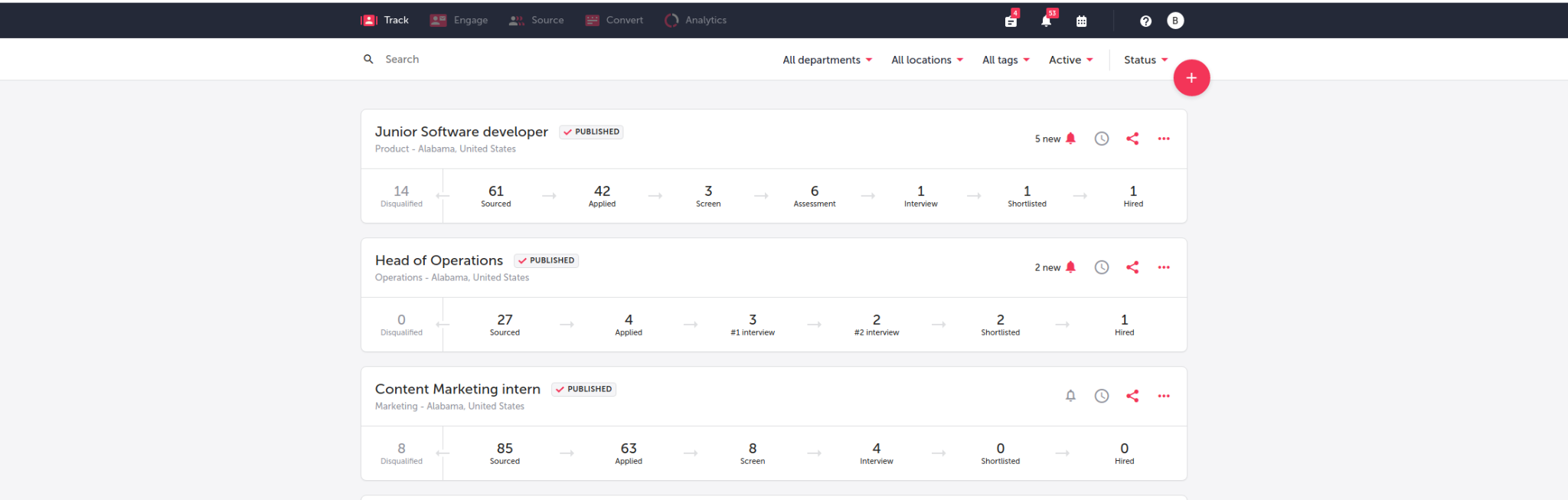
Before you determine which steps will be automated and which actions will be triggered at which specific moment, you should have all your processes tailored and all sorted out. Whether you have a strategy tailored explicitly for hiring software developers or seasonal workers in tourism, they should all be standardized for each level of their expertise. Predefining all stages, assessment methods, and criteria and setting it up in your tool is a foundation for automating the process.
Segment your candidates
The next thing you should take care of is to segment your database based on various criteria. For example, you probably have candidates from different locations with different levels of expertise specializing in different fields. All these aspects make it essential to segment your database into various meaningful talent pools. The importance of creating different talent pools lies in multiple parts of your work.
First and foremost, creating a talent pool for each different group of talent gives you a good overview of who you already have in the database for future opportunities. Meaning, that if you have to recruit a Senior Java Developer sometime in the future, you can always go back and refer to the candidates from that specific pool and potentially hire a person without ever posting a job to any job board or social media.
Such an approach has several benefits; besides saving your time and resources that would otherwise be spent on advertising your job, you also introduce a more organized way of recruiting and setting foundations for more targeted recruitment marketing campaigns.
Step-by-step to automation
Once you’ve organized your process and your database, you can start implementing your automation features. To best showcase automation possibilities, we decided to create a hypothetical hiring situation and take you through all steps of such hiring.
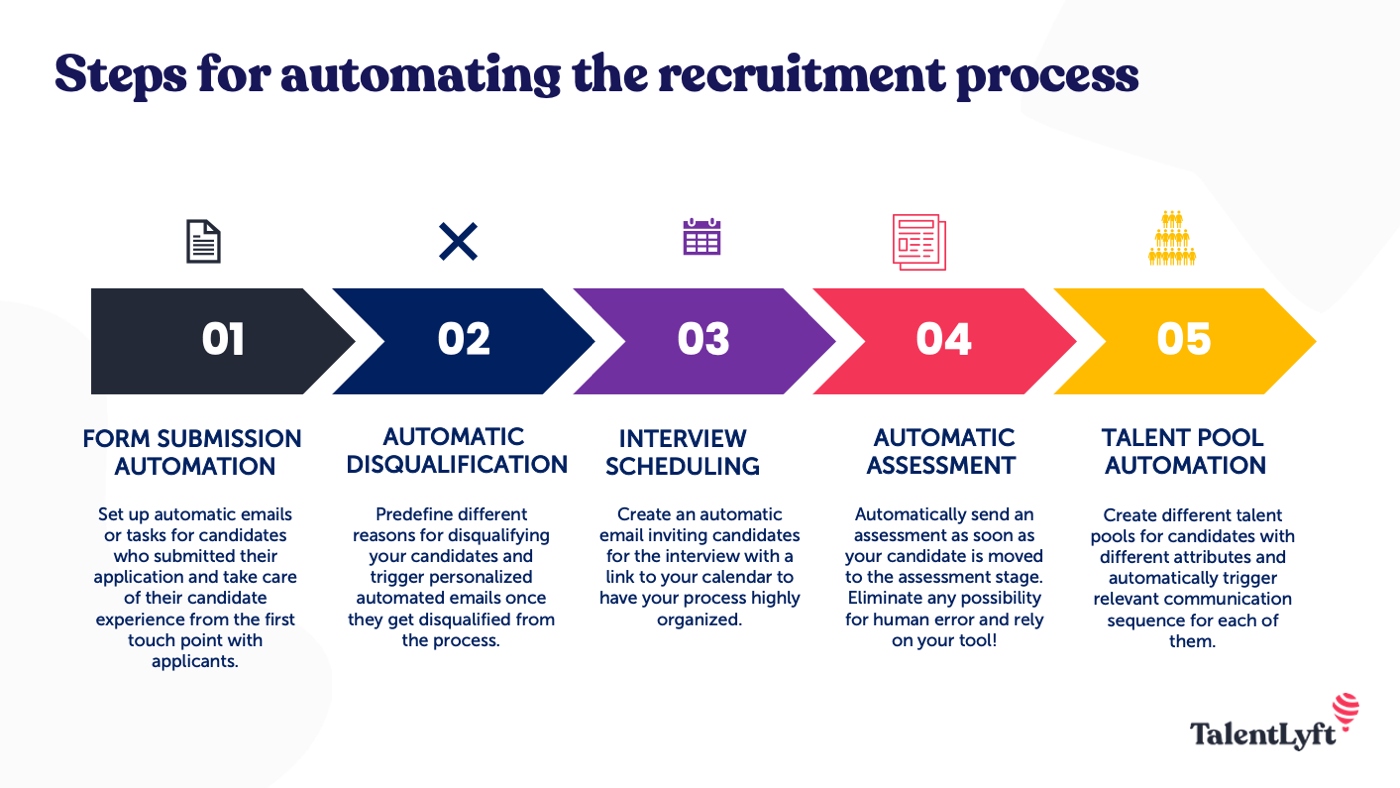
Let’s say you are hiring a Junior Software Developer at your company. Before you post and start advertising the job, you define an email that will be sent to anyone who submits an application form. This is probably a thank you email with a few details about the upcoming steps and the time it will take you to get back to them with specific information.
After closing the job opening and reviewing the applications, you move a set of candidates to the next step and disqualify the rest. Those who are disqualified will automatically receive a specific email upon their disqualification, depending on the reasons for disqualification. The ones sent to the next stage, will receive an email with an invitation to interview, explaining all details with a link to your calendar to book a timeslot for the meeting.
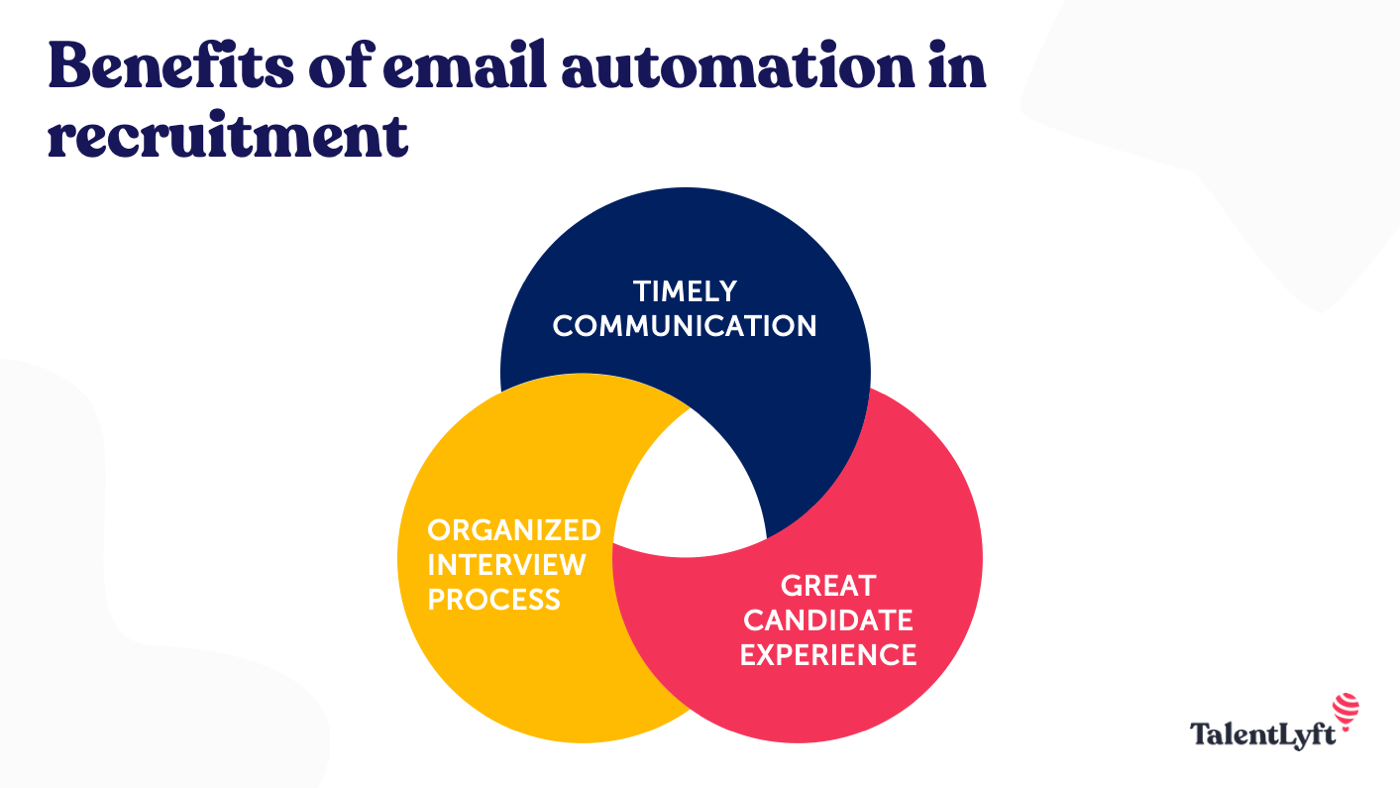
This way, with simple planning and presetting emails to be triggered when an action occurs, you can take care of multiple organizational issues:
-
Sending timely emails with relevant information
-
Organizing interviews and your schedule
-
Making sure to provide a good experience for all candidates
Furthermore, once you’re done with all interviews and decide who is going to the next round of written assessment and who will be disqualified, you can leverage automation again. The candidates qualified for assessment can receive an automatic email containing the test, and the ones disqualified will automatically receive an adequate message as well.
After the assessment, you can even set up an automatic tag for candidates with specific skills. For example, let’s say that the additional question was regarding the languages that the candidate speaks. Suppose you test how good their knowledge is of other languages. In that case, you could add tags to candidates who pose such skills and later refer to them by filtering your candidate base based on these specific criteria.
Ultimately, once you have shortlisted some candidates, you can either have them automatically added to the shortlisted pool or create a talent pool for silver medalists upon deciding to hire someone. Again, having them added to the talent pool, you can trigger different content to be sent to them. This additional segmentation of candidates allows you to better target your recruitment marketing or employer branding-related campaigns by sending them precisely tailored content.
Once you reach the stage of hiring and disqualifying candidates in the final step, we advise you to take the most personal approach possible and avoid automating these messages. Giving specific reasons and maximally personalized messages or even a phone call to your final candidates shows additional respect and builds a relationship for the future.
Building communities
Thanks to automation, you will not only optimize your process but also build different talent communities easier. Even though some claim that automation will make recruitment less human, this is far from true. By leveraging automation inside your pools, you can count on having your communication constant and relevant with all candidates while only being set up once and tweaked a little with time.
Automating your communication flows allows you to think about how you want to organize your communication in advance to make the most sense to the candidates. By creating different sequences for different groups of candidates, everyone will win. Your candidates will get relevant information just when they need it. You will make sure to communicate regularly with them and leave out any possibility of human error and forgetting to send any relevant content.
Personalized automation vs. personal messages
Finally, when setting up your automated communication flows, never forget about the person behind reading that message. Even though other automated actions like adding a candidate automatically to a talent pool or adding a tag or a task to their profile don’t require you to give any additional thoughts, automating your communication can be sensitive. Therefore, always try to add as many personalized elements as possible and skip automating messages regarding some sensitive information, like disqualifying candidates from the last round or sending out a job offer. Ultimately, the combination of wholly personalized and automated messages should be the way to create long-lasting and genuine relationships with the candidates.
Applicant Tracking, Recruitment Marketing, Sourcing and Talent CRM software are powerful alone, but unstoppable when used together!


